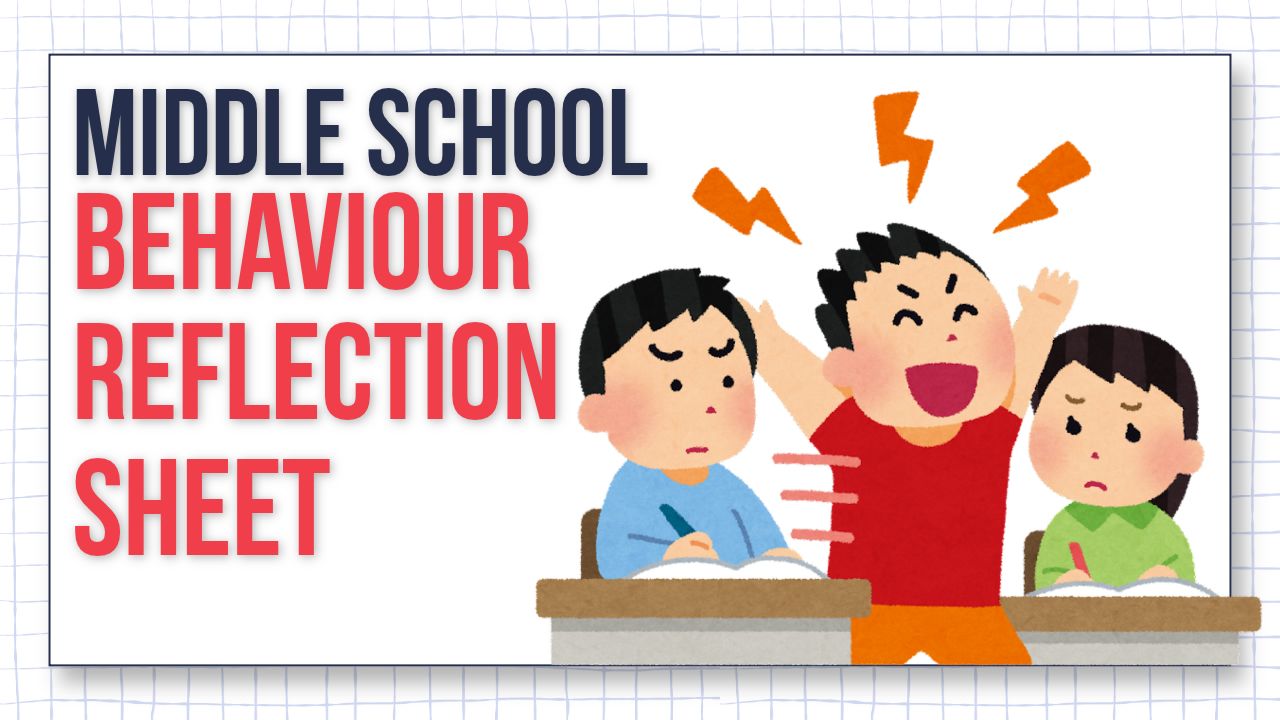
Middle schoolers stop listening the moment a lecture starts. Say “think about what you did,” and you get a blank stare.
A behavior reflection sheet skips the lecture. You hand them a few questions instead: What happened? What was I feeling? Who did this affect? What will I do differently next time?
They write it down, on their own, without an audience. Most kids take more ownership when they reach the answer themselves than when someone hands it to them.
It also gives you something to talk about afterward. The conversation starts from their words, not your frustration, so it’s a lot less likely to turn into an argument.
I made a few printable versions you can use at school or at home. They’re free and at the bottom of this post. Print one and keep it somewhere easy to grab.
Why reflection works better than punishment
Punishment ends when the detention does. Reflection sticks around.
It builds self-awareness. Writing out what happened and why makes a kid slow down and see their own part in it. That’s hard to get from being told.
It keeps them from feeling attacked. When a student feels cornered, they defend themselves instead of thinking. A sheet takes the adult out of the argument, so the conversation is between the student and the choice they made. A teacher at Edutopia saw this firsthand: giving students a structured chance to reflect on their behavior worked where a hard-nosed approach hadn’t. You can read her story here. edutopia
It gives you something concrete to talk through. Instead of “why did you do that?” and a shrug, you have their own words on paper. Start there.
The research backs this up too. RAND studies found that middle schoolers with more restorative experiences reported more peer support, a better classroom climate, and less bullying.
What’s on the sheet
The sheet has five questions, short enough for a middle schooler to finish without feeling overwhelmed.
1. What happened?
Start with the facts. Getting the story down in plain words makes the rest easier to be honest about.
2. What was I thinking or feeling?
Behavior usually has a reason behind it, like frustration, embarrassment, or wanting attention. Naming it helps them notice it next time. If big emotions come up often, these DBT worksheets for teenagers can help them manage them.
3. Who was affected?
This question often shifts things. A classmate, a teacher, or the whole room may have felt the impact, and it helps students see beyond their own side.
4. What could I do differently?
Encourage specific answers. “Walk away,” “ask for a break,” or “talk to the teacher” gives them something real to try.
5. How will I make it right?
An apology, helping clean up, or checking in with the person. It gives them a way to move forward. A reminder that one mistake doesn’t define them helps too, and these affirmations for middle school are a good place to start.
Printable Behaviour Reflection Sheet
I made three printables so you can match the sheet to the situation. All three are free, and each prints on a standard page.
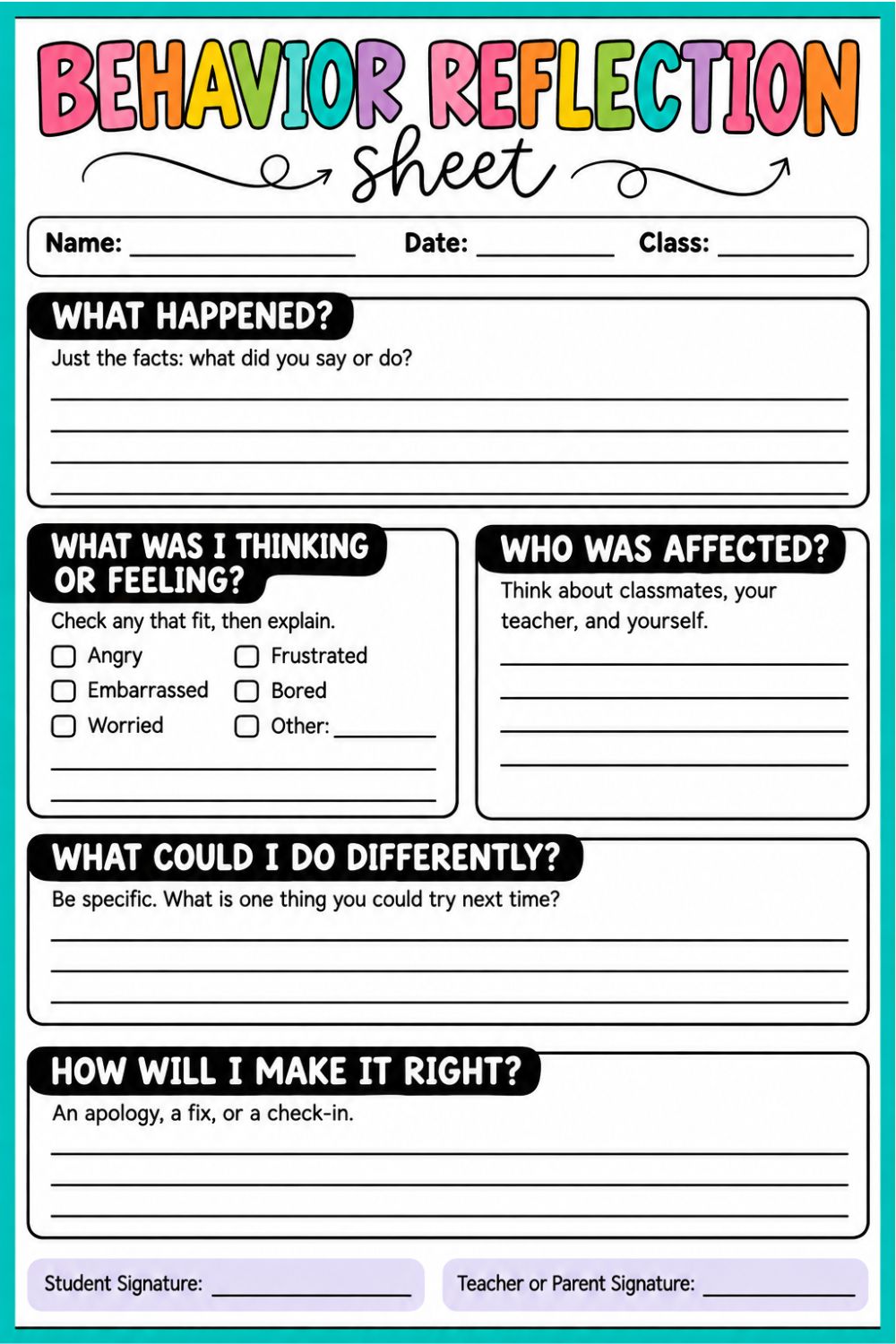
1. Behavior Reflection Sheet
This is the full version. It walks the student through all five questions: what happened, what they were feeling, who was affected, what they could do differently, and how they’ll make it right. Use it after a bigger incident, when a student needs time to think it through properly.
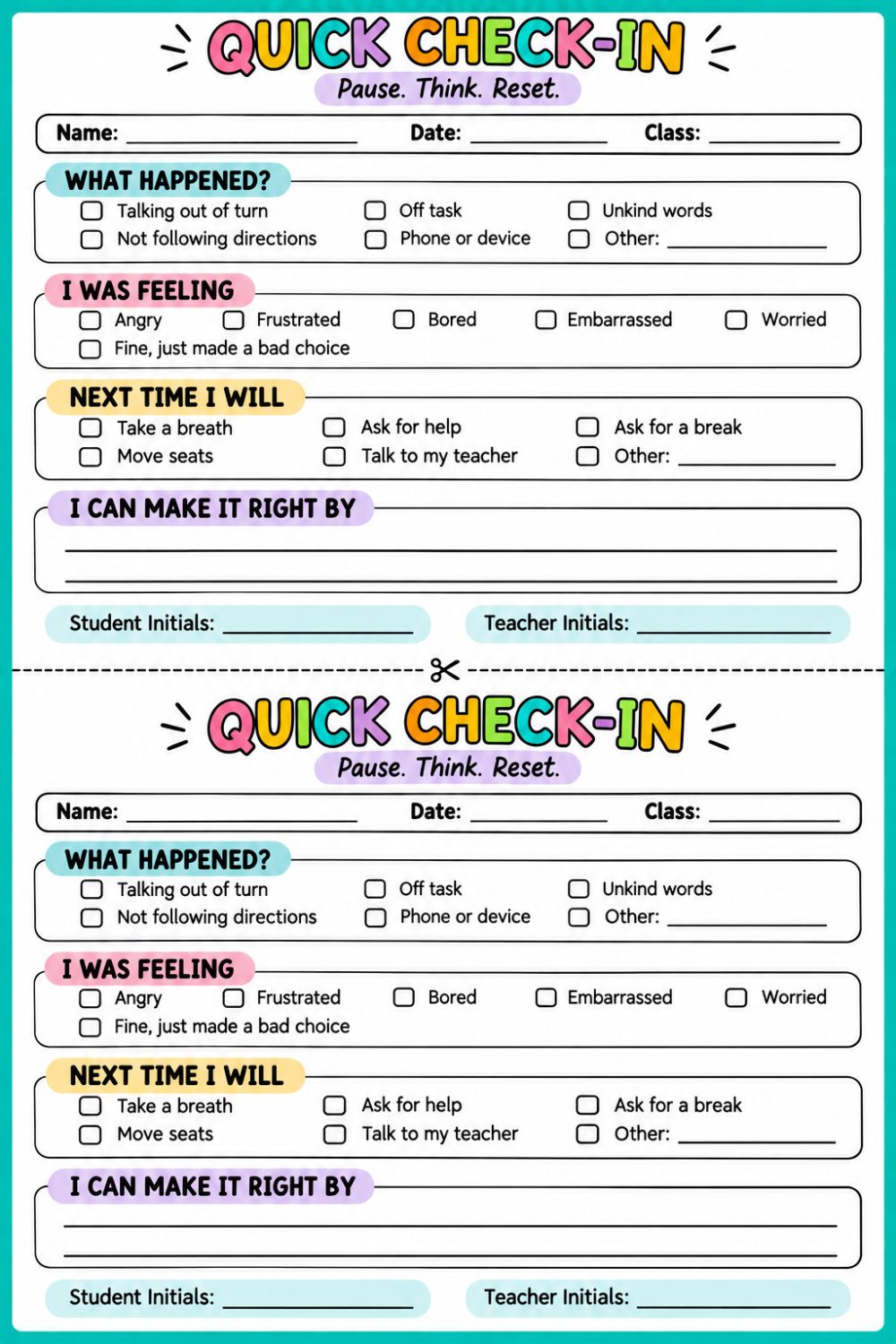
2. Quick Check-In
A short tick-box slip, with two on each page. Students check what happened, how they felt, and what they’ll try next time, then add one line on how they’ll make it right. It works well for minor issues, when a full sheet would be too much.
3. Weekly Reset Plan
For behavior that keeps coming back. The student describes the pattern, picks one small goal, and decides what would help. They then check in each day, Monday to Friday, with a few words on how it went. It works best with a quick conversation with an adult at the end of the week.
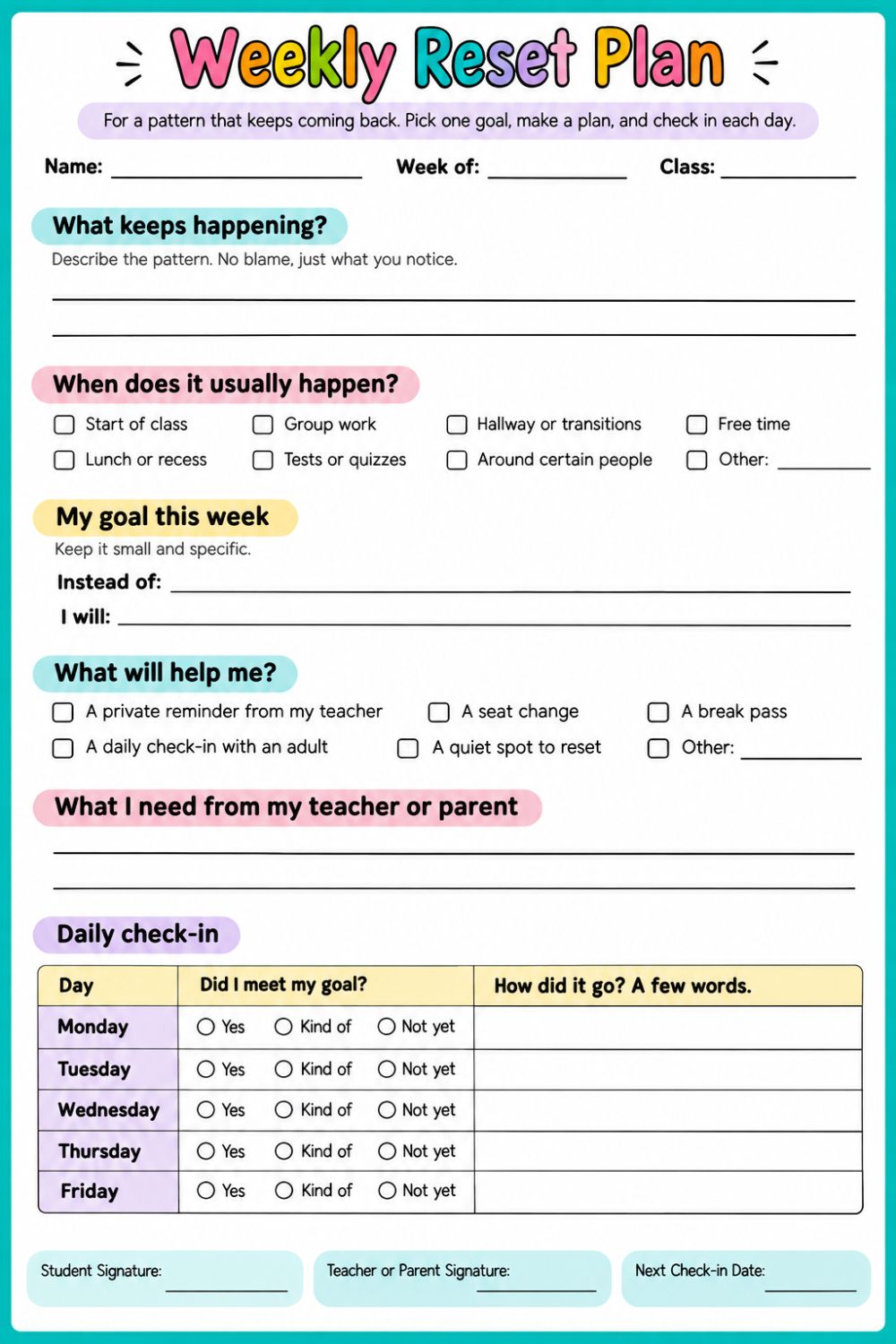
Not sure which to pick? Start with the Quick Check-In for small stuff, move to the full sheet for bigger moments, and bring in the Weekly Reset Plan when you see the same thing happen again and again.
How to use the sheets
Timing matters most. Wait until the student has calmed down before handing one over. A kid who’s still upset won’t reflect; they’ll defend, so give them a few minutes first.
Keep it private. Hand it over quietly, and don’t read it out loud or comment on it in front of others. Students only write honestly when they feel safe doing it.
The sheet is also just a starting point. Once they’ve finished, sit down for a minute and ask about what they wrote. That conversation is where the real learning happens. If a student opens up more on paper than out loud, these journal prompts for mental health make a good follow-up.
Keep your tone calm and neutral throughout. If you hand it over while you’re frustrated, it will feel like a punishment, and a punishment gets one-word answers. So skip the “fill this out or else,” and let the sheet be a chance to reset instead. It also helps when expectations are clear before anything goes wrong, and these printable classroom rules for middle school are a good starting point.
When a student owns their part, even in a small way, say so. Praising honest answers is how you get more of them.
Finally, keep a copy. After a few weeks, the sheets can show you patterns, like the same trigger, the same time of day, or the same person. If you spot one, that’s your cue to try the Weekly Reset Plan.
Download PDF
Grab your free copy below and print as many as you need.
Color looks nice, but black and white works fine too. For the Quick Check-In, cut along the dotted line to get two slips per page.
That’s it!
Most middle schoolers don’t need another lecture. They need a moment to slow down and look at what happened, and a reflection sheet gives them that without turning it into a standoff.
The sheet won’t fix behavior on its own. What helps is the pause it creates and the conversation that follows. Over time, students start to notice their own patterns, and they get better at making a different choice.
Start small. Pick one sheet, use it the next time something comes up, and see how the student responds. A few honest answers on paper can make the next conversation much easier.

An engineer, Maths expert, Online Tutor and animal rights activist. In more than 5+ years of my online teaching experience, I closely worked with many students struggling with dyscalculia and dyslexia. With the years passing, I learned that not much effort being put into the awareness of this learning disorder. Students with dyscalculia often misunderstood for having just a simple math fear. This is still an underresearched and understudied subject. I am also the founder of Smartynote -‘The notepad app for dyslexia’,