
![Printable Classroom Rules for Middle School [PDF Included]](https://numberdyslexia.com/wp-content/uploads/2026/10/Classroom-Rules-for-middle-school-1.jpg)
Ah, middle school! Students are chasing independence, caring a whole lot about their friends, and figuring out just how far the rules can bend. That’s totally normal, and it’s exactly why clear classroom rules matter right now. When everyone knows what’s expected, teachers get to spend less time managing behavior and more time actually teaching.
In this post, you’ll get 10 simple, ready-to-use rules made just for middle schoolers, plus free printable posters you can hang up in the classroom. We’ll also chat about how to create the rules with your students, teach them, celebrate them, and keep them working all year long.
Ready? Let’s get started!
Setting the Stage for a Respectful Classroom
Before the poster goes up, let’s talk vibes! Think of rules as the fence and classroom culture as the garden. The fence helps, but the garden is what makes everyone want to be there. A welcoming vibe starts right at the entrance, so these classroom door decoration ideas are a great way to give students a friendly first hello.
Why a positive culture makes rules easier to follow
Happy classrooms tend to be well-behaved classrooms. A review of more than 200 studies, reported by Education Week, linked a positive school climate to better learning, higher graduation rates, and lower absenteeism.
You also don’t have to choose between firm and friendly. A study of 39,364 seventh and eighth graders found that strong structure plus strong support went along with higher engagement and better grades. Belonging helps, too. The CDC reports that students who feel connected to school tend to have higher grades and better attendance. Displaying student work with care helps students feel they belong, and these student art display ideas show how.
How clear expectations help students feel safe
Students who feel psychologically safe can join in without fear of being laughed at or judged. That’s a big deal at an age when nobody wants to look silly in front of their friends! Clear expectations are a key ingredient.
How you share the rules matters, too. Research summarized by TIE suggests students meet expectations more often when they’re clear, positive, consistent, and built into daily routines. That’s exactly why our 10 rules are short and phrased as “do this” instead of “don’t do that.”
The 10 Classroom Rules for Middle School
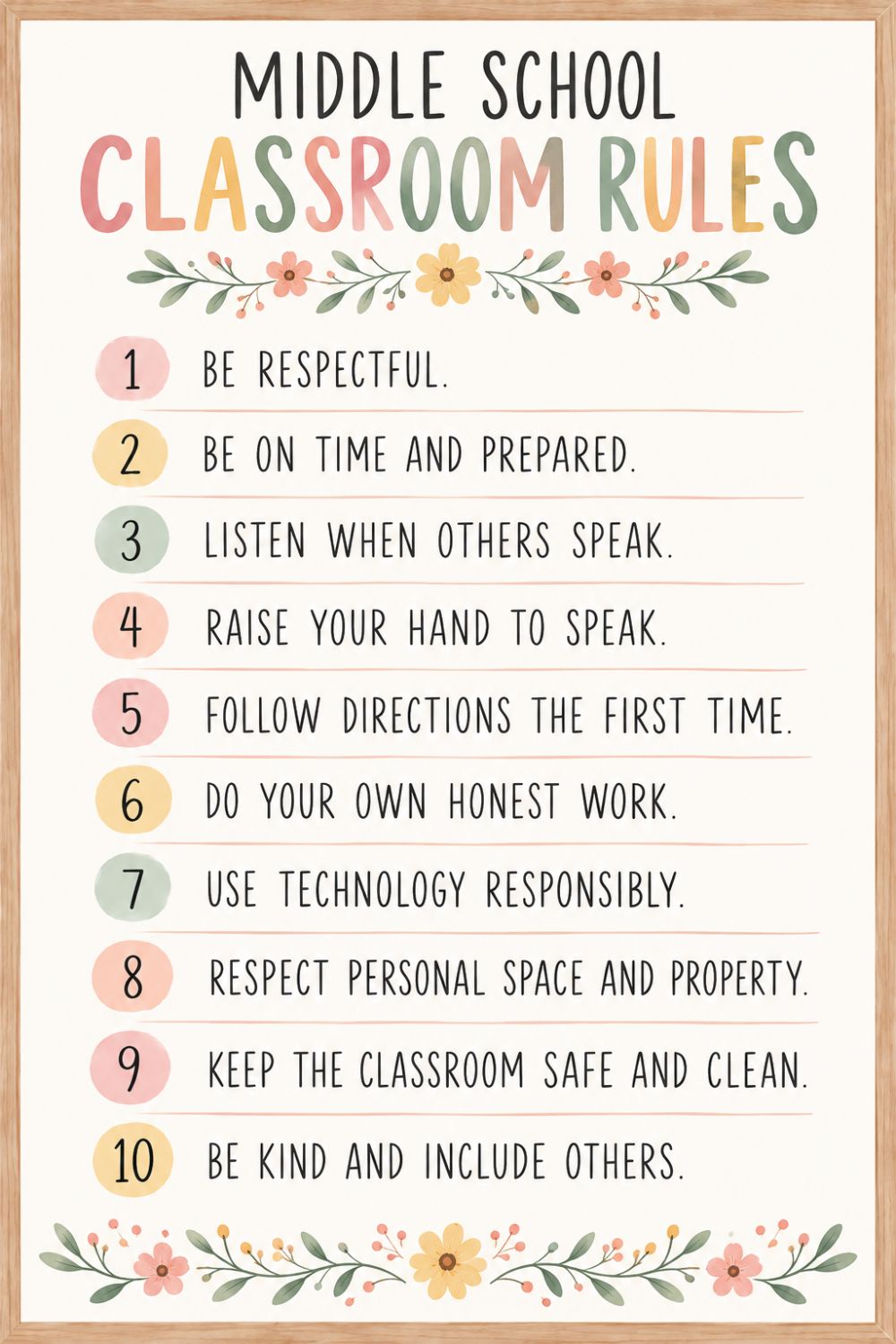
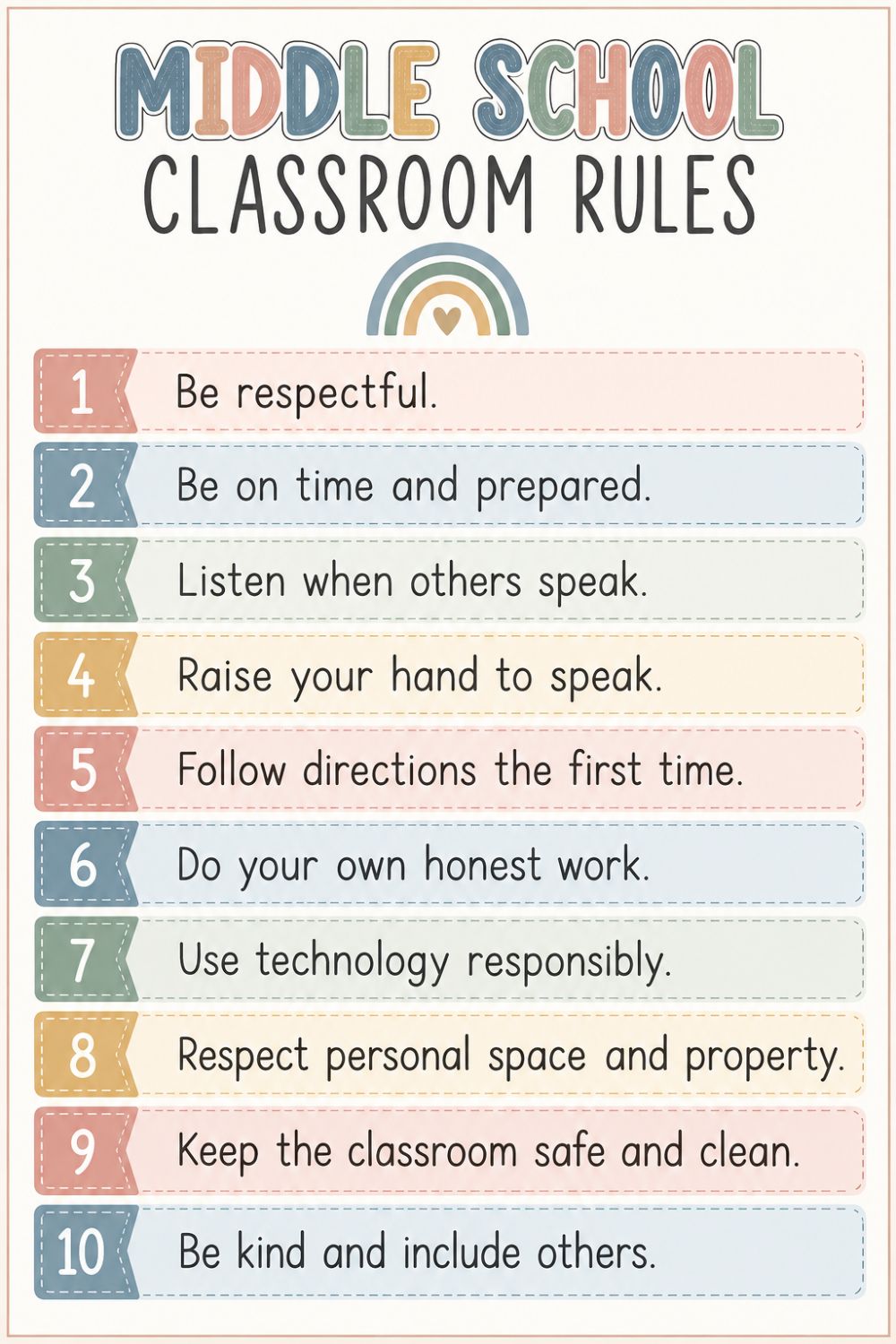
Here they are! Each rule is short and positive, with a quick note on why it matters and what it looks like in real life. Students can’t follow a rule they can’t picture, so the examples do a lot of work.
1. Be respectful
Respect is the foundation for every other rule on this list. It means treating classmates, teachers, and staff the way you’d want to be treated, even when you disagree.
What it looks like: Using kind words, saying please and thank you, and disagreeing without put-downs.
2. Be on time and prepared
Walking in late or without supplies makes it harder to learn and interrupts everyone else. Being ready shows you care about your time and your classmates’ time.
What it looks like: Being in your seat when the bell rings, with your notebook, pencil, and homework out.
3. Listen when others speak
Good listening is a big part of respect. When students feel heard, they’re more willing to share, and the whole class gets smarter.
What it looks like: Eyes on the speaker, quiet voices, and waiting until someone finishes before jumping in.
4. Raise your hand to speak
This keeps discussions organized and gives every student a fair chance to be heard, not just the loudest voices.
What it looks like: Raising your hand, waiting to be called on, and saving side conversations for later.
5. Follow directions the first time
When directions are followed quickly, there’s more time for learning and more time for fun. If you disagree or don’t understand, that’s okay. Just handle it respectfully.
What it looks like: Starting the task right away, asking a question if you’re stuck, and talking to the teacher privately if you have a concern.
6. Do your own honest work
Real learning only happens when the work is yours. Mistakes are part of the process, and asking for help is always better than copying.
What it looks like: Putting your own ideas on the page, giving credit for sources, and asking a teacher or classmate for help when you need it.
7. Use technology responsibly
Devices can be awesome learning tools, but they can also be big distractions. Clear boundaries help everyone stay focused.
What it looks like: Keeping phones silenced and put away, using school devices only for assigned tasks, and thinking before you post or message.
8. Respect personal space and property
Everyone deserves to feel comfortable in the room and to trust that their belongings are safe.
What it looks like: Keeping your hands and feet to yourself, asking before borrowing, and returning things in the same shape you found them.
9. Keep the classroom safe and clean
A tidy, safe room is a shared responsibility. Small habits add up to a space where everyone can focus.
What it looks like: Walking in the room, pushing in chairs, throwing away trash, and telling the teacher about anything unsafe.
10. Be kind and include others
Middle school can be tough socially, and small acts of kindness make a huge difference. This rule helps every student feel like they belong.
What it looks like: Inviting someone to join your group, welcoming new students, and speaking up when someone’s being left out or treated unfairly.
Download Your Free Printable
Printable versions of these classroom rules are provided below. These charts present all the rules in a clear, easy-to-read layout suitable for display on a classroom wall.
Need a spot to hang it? These classroom bulletin board ideas include kindness and positivity boards that pair well with your rules.
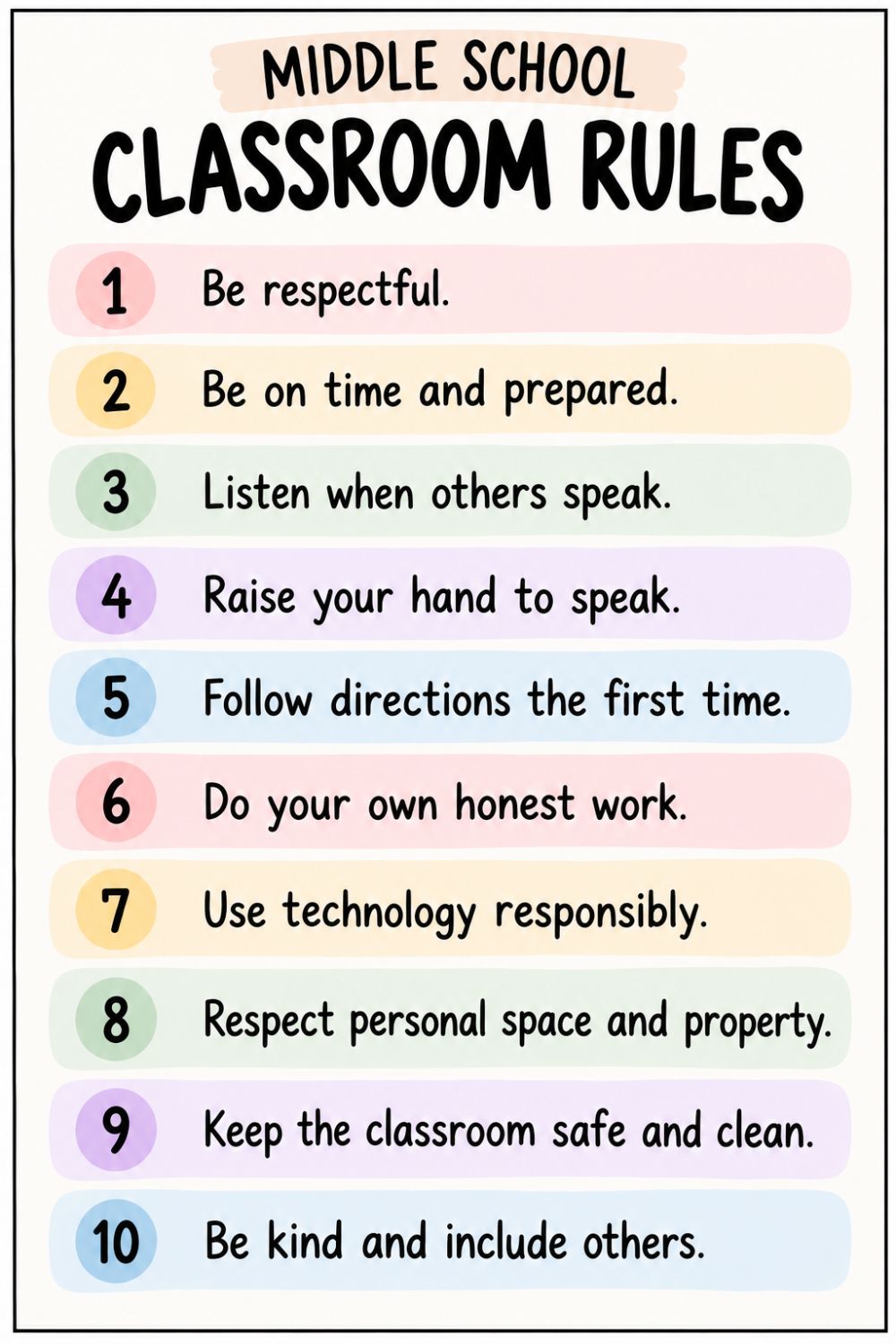
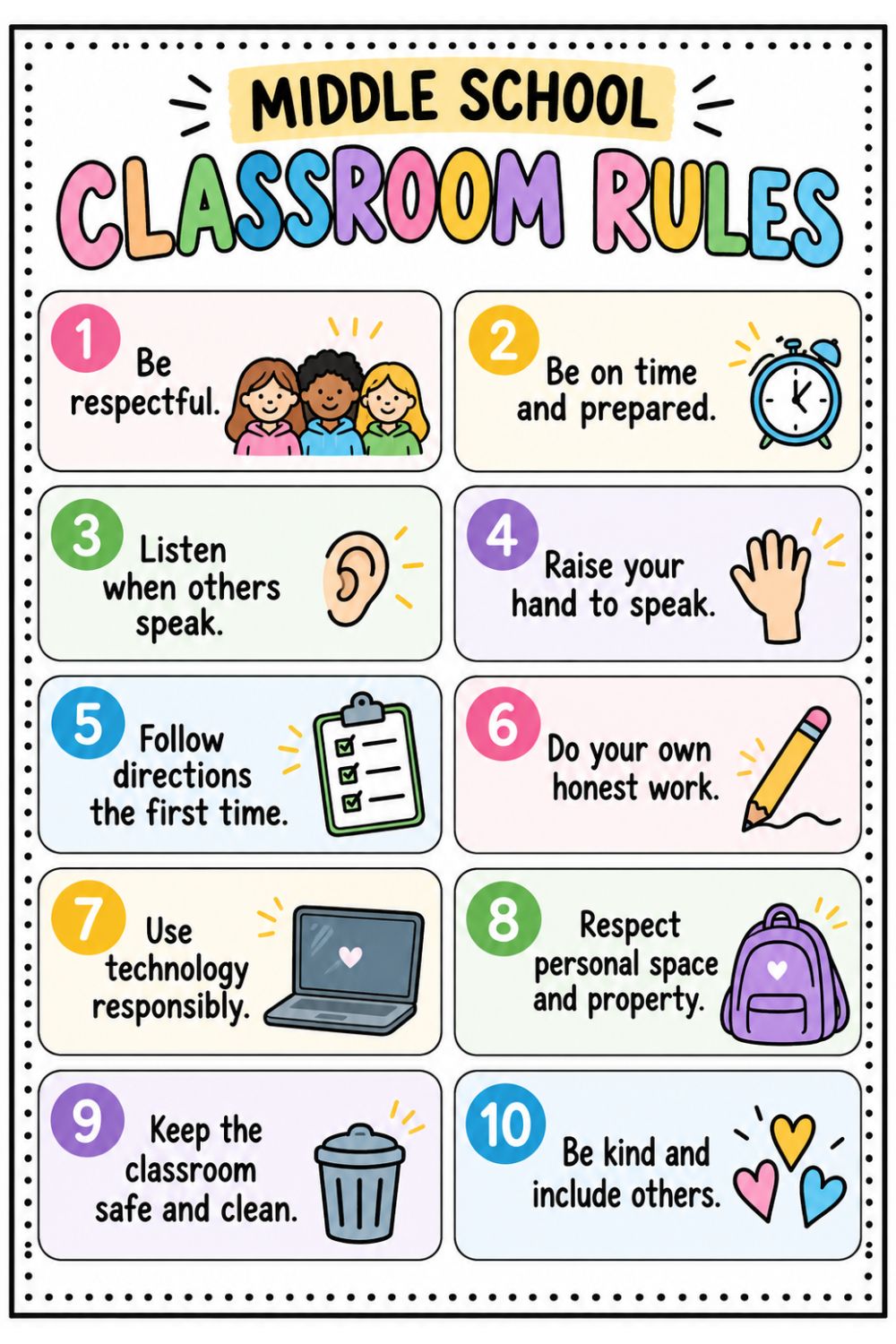
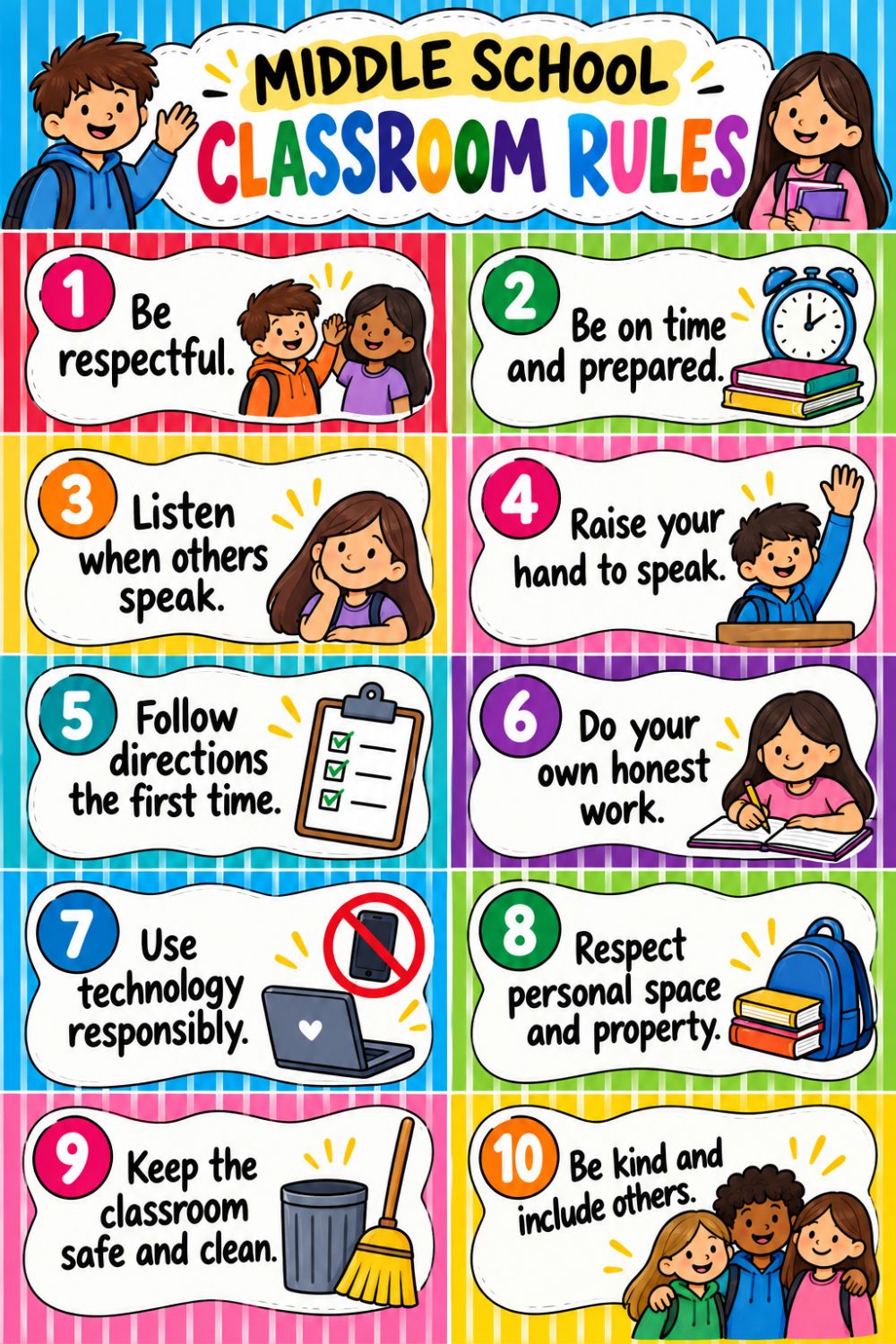
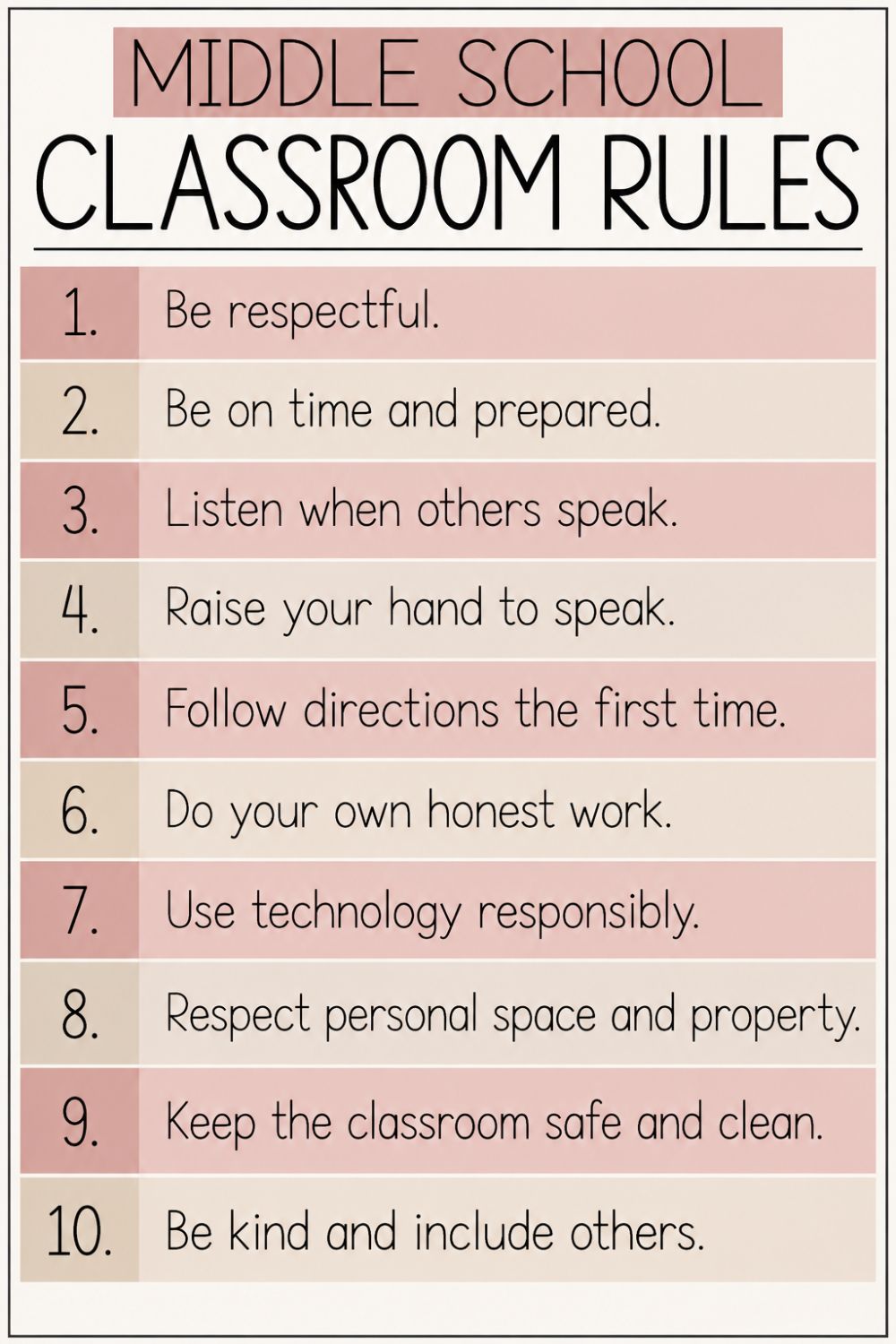
How to Create, Teach, and Celebrate Your Rules
Once your poster is ready, a few simple steps help the rules stick. Here’s the flow!
Create them together. Rules hit differently when students help write them. Instead of “the teacher’s rules,” they become “our rules.” Big difference! Have small groups brainstorm what they need to learn well and feel good in the room, sort the ideas into themes like respect, safety, and focus, then vote.
Use the 10 rules in this post as a starting menu, and let students pick favorites, reword them, or add one of their own. Finish by having everyone sign the final poster. You’re still the guide, so students propose and you shape the final list.
Why does this work? Students tend to feel more connected to the class and more bought in to rules they helped develop. A research review from UC Berkeley’s GGIE project suggests that students involved in setting norms understand and respect them more, and feeling heard helps them see the classroom as fair. It fits middle schoolers perfectly, too. Autonomy is a basic psychological need, and in a study of 129 middle school students, those who felt more autonomy support from teachers reported higher confidence and more engagement in learning.
Word them positively. Tell students what to do, not just what to skip. Positive rules sound friendlier and give students a clear picture of success. Here’s a quick glow-up:
| Instead of… | Try… |
|---|---|
| Don’t talk when others are talking | Listen when others speak |
| No running | Walk in the classroom |
| Don’t be late | Be on time and prepared |
| No cheating | Do your own honest work |
| Don’t be mean | Be kind and include others |
Teach and practice them. A poster on the wall is a great start, but rules have to be taught, just like math. A review of classroom rules research found that teaching the rules to students is one of the most important things you can do. Model what each rule looks like, then role-play the right way, the wrong way, and the “almost right” way (students love spotting that one!). Review the rules daily at first, then weekly once they stick.
Celebrate them. Catch students being awesome! Specific praise works best, like “Thanks for helping Maya find the page” instead of just “Good job.” Research on behavior-specific praise shows it can boost engagement and cut down on disruptions. Team points, free-choice time, a music day, or a quick positive note home can all add to the fun. A handy rule of thumb is to aim for more positive comments than corrections, about four to one.
I merged the three sections into one, turned the lists into short paragraphs, and trimmed some wording. The next section (“Reviewing and Updating Rules Mid-Year”) still flows from the last line here.
Reviewing and Updating Rules Mid-Year
With the rules taught and celebrated, one last step keeps them working. Here’s the thing about classroom rules: they don’t break all at once. They drift. A few weeks into the year the newness wears off, and after a long break students come back a little wobbly. That’s totally normal! A quick tune-up keeps your rules fresh, fair, and actually useful.
When to check in
A simple rhythm works great. Responsive Classroom educators suggest a formal review at three points:
- After the first six weeks: see what’s working and what needs tweaking.
- Before winter break: a calm reset before the holiday excitement kicks in.
- Before spring break: one more refresh for the final stretch.
January is a bonus fresh start. It feels like a new chapter, so it’s a perfect time to reconnect with the class’s shared agreements. Even if the rules stay exactly the same, talking about them helps rebuild that “we’re in this together” feeling. A quick ten-minute chat is all it takes.
Conclusion
Great classroom rules don’t need to be long or complicated. A few clear, positive rules, posted where everyone can see them, can turn a busy middle school classroom into a respectful, happy place to learn.
That’s why we made the printables! Your free classroom rules posters have all 10 rules in a bright, easy-to-read layout, ready to print and hang up today. Print these on poster-size paper for the wall, or use the student contract version so everyone can sign and make it official.

An engineer, Maths expert, Online Tutor and animal rights activist. In more than 5+ years of my online teaching experience, I closely worked with many students struggling with dyscalculia and dyslexia. With the years passing, I learned that not much effort being put into the awareness of this learning disorder. Students with dyscalculia often misunderstood for having just a simple math fear. This is still an underresearched and understudied subject. I am also the founder of Smartynote -‘The notepad app for dyslexia’,