
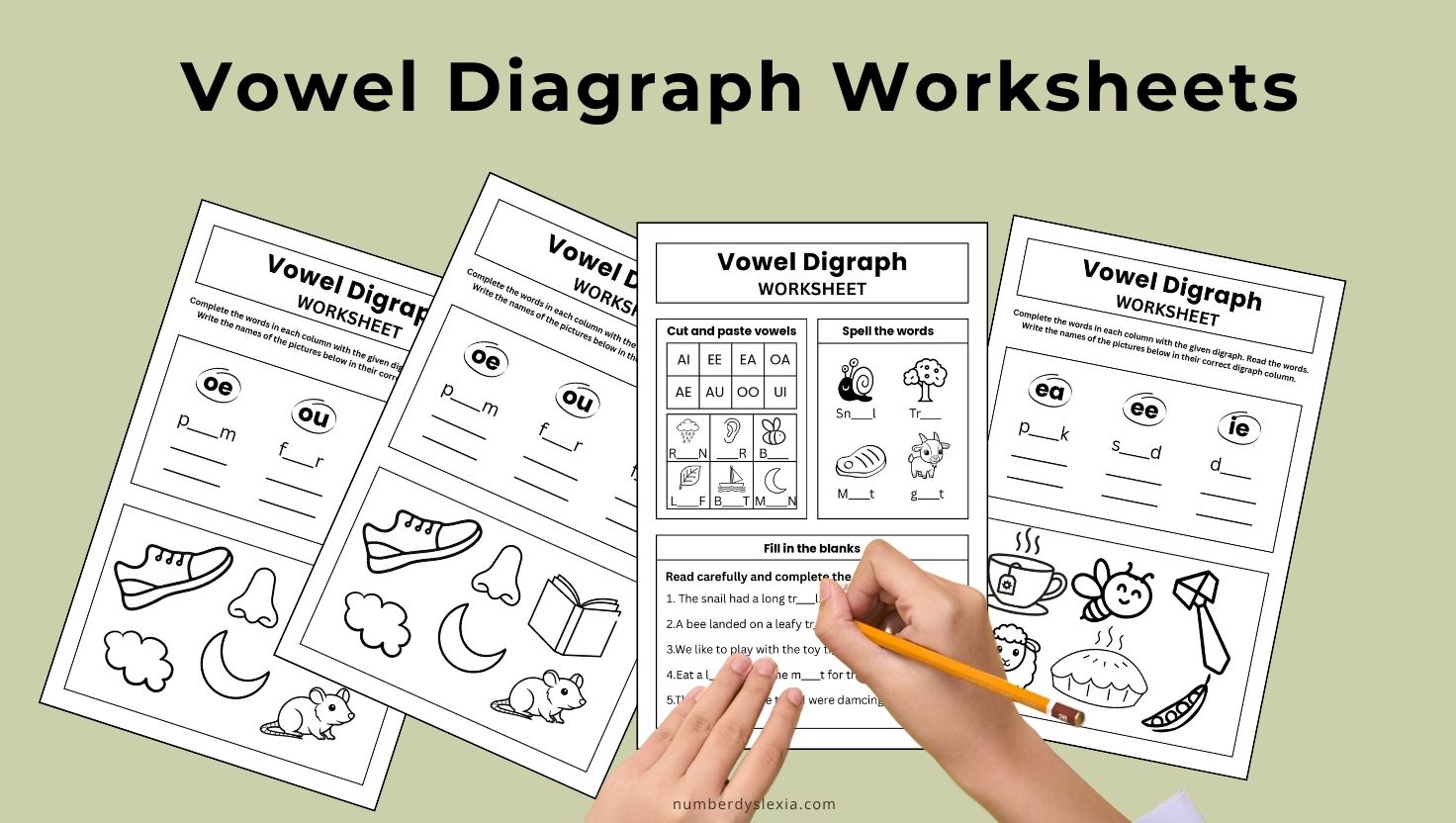
No matter if you are a parent or a teacher, watching children read is an absolute joy. Learning to read begins with recognizing letters. However, it is equally important for children to understand the sounds words make together. Do you know that many English words follow simple one-letter-one-sound rules? This can make reading confusing.
To tackle the challenge, here is something useful for you – vowel digraph worksheets. These worksheets are designed to make learners understand how two vowels can make a completely new sound. With a mix of word-building exercises and sentence practice, children gradually develop confidence in using vowel digraphs.
Easy to Use Vowel Digraph Worksheets
Instead of rote learning, using the vowel digraph worksheets encourages understanding among children. They also help learners build a strong phonics foundation. Ultimately, the sheets support both reading fluency and spelling skills.
Worksheet 1

The first worksheet in the set of vowel digraph worksheets helps you understand how vowel digraphs like ai, oa, and oi work together. Children can learn to create new sounds. Instead of memorising, the page actively completes simple words.
Learners need to choose the correct letter pair, thereby strengthening their phonics understanding. It also includes child-friendly illustrations that encourage visual recognition. By connecting pictures to sounds, children improve reading and spelling skills.
This page supports early decoding abilities. It also builds confidence in identifying patterns within words. Hence, teachers, parents, and tutors can use this worksheet for fluent reading practice. Combine them with online vowel games for kindergarteners to add fun and excitement.
Worksheet 2
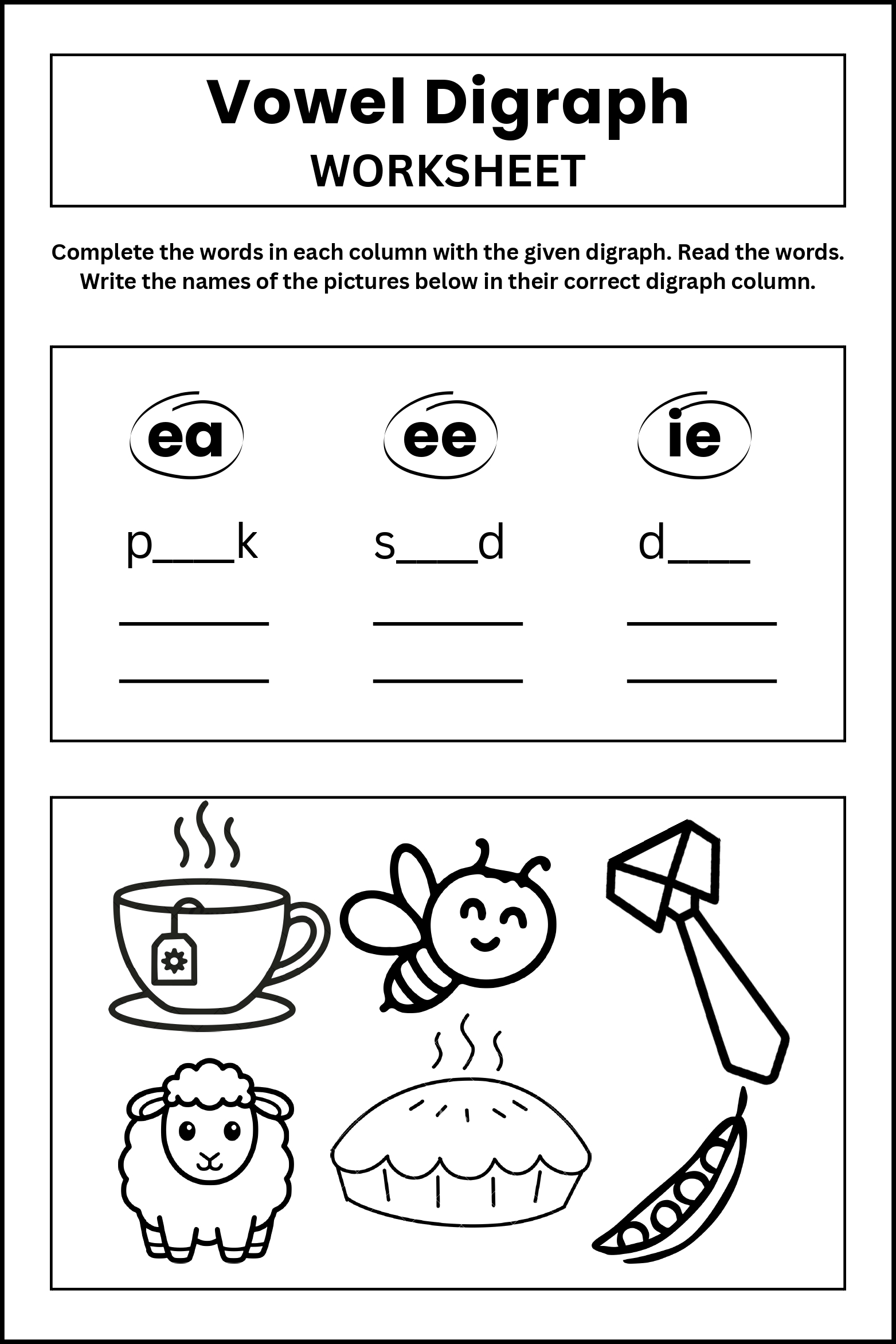
This worksheet focuses on developing a deeper understanding of vowel sounds using ea, ee, and ie. Children get an opportunity to fill in missing letters to complete words. It encourages them to think about pronunciation and sound patterns.
The worksheet also has familiar images, allowing children to connect with real-life objects. As the page focuses on visual and phonetic connection, it improves grammatical understanding in little ones.
You can also challenge students to think of other words beyond the ones on the worksheet. As the activity enhances vocabulary, it helps with spelling accuracy. By repeatedly seeing and using these digraphs, learners can become more confident readers and writers.
Worksheet 3
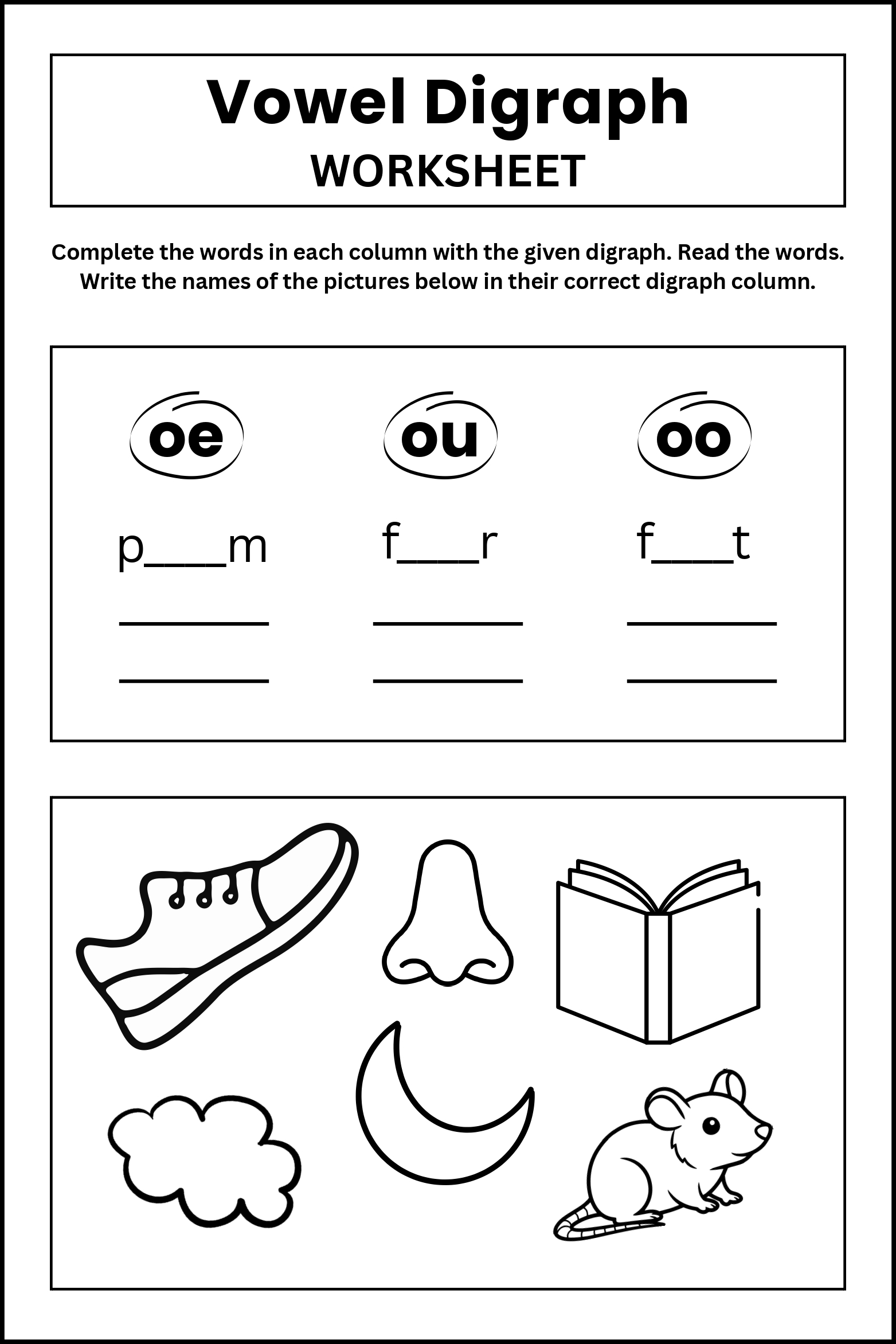
The third sheet introduces children with slightly different vowel combinations. It has oe, ou, and oo, helping children expand their phonics knowledge. It features word completion tasks and picture-based sorting. So, children can practice identifying the correct sounds in a structured format.
The mix of activities keeps learners engaged while increasing their listening skills. It also improves their imagination by connecting to pictures they see in everyday life. You can support reading fluency and help with correct letter placement. By combining two worksheets, you can create a competitive learning environment.
Worksheet 4
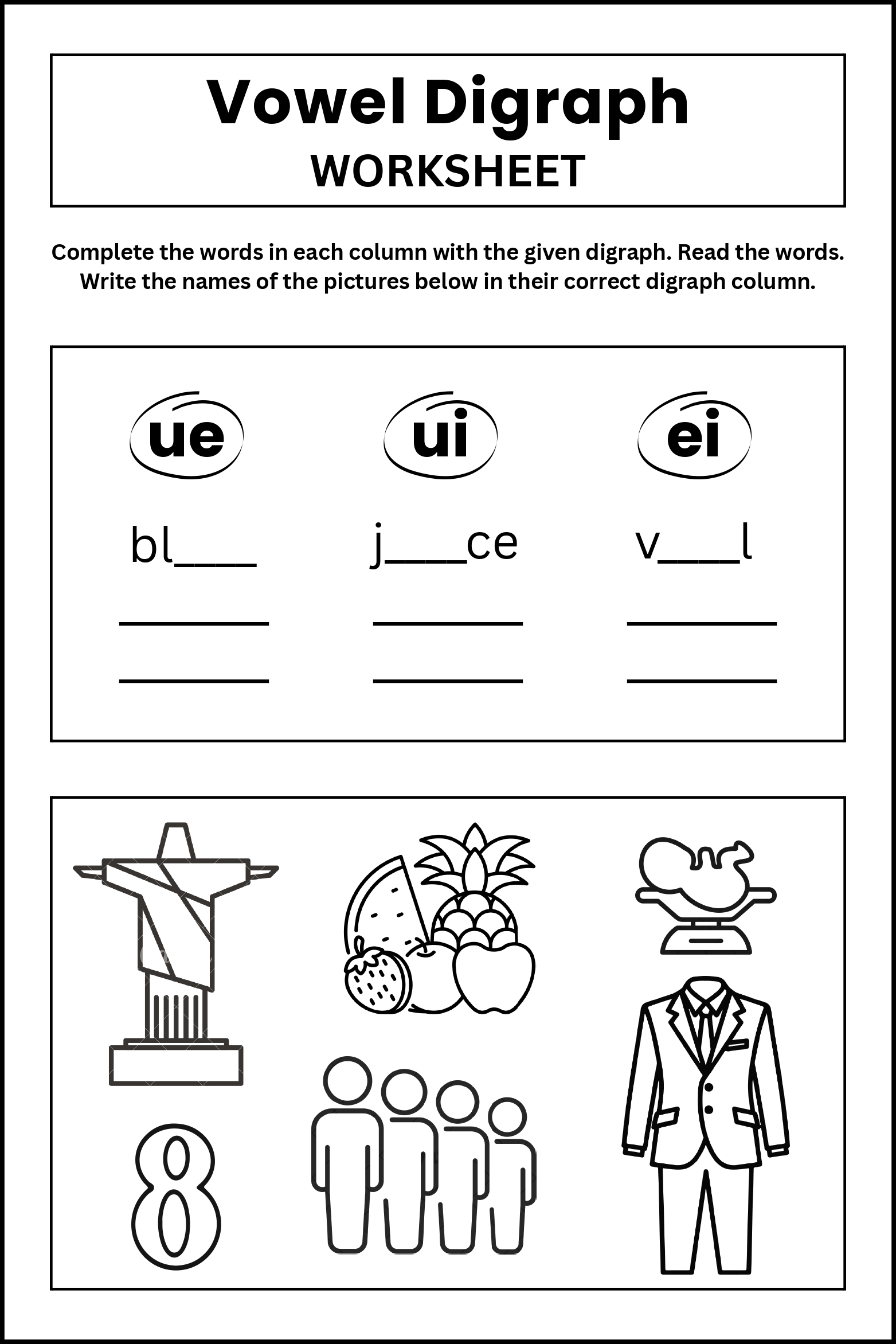
Have you ever noticed how some words use unusual vowel combinations to make unique sounds? This worksheet introduces learners to digraphs like ue, ui, and ei. It helps them explore beyond the more common patterns.
Through simple fill-in-the-blank exercises, children can practice choosing the correct vowel pair. It also improves their spelling and pronunciation. The engaging visuals encourage learners to identify objects and connect them with the right sounds.
The worksheet helps you turn learning into an interactive activity. You can also use this worksheet to challenge students to think deeper about phonics. They not only gain confidence in reading unfamiliar words but also develop a more flexible understanding of vowel combinations.
Worksheet 5

The last worksheet brings together multiple activities to reinforce learning. It has a cut-and-paste exercise to match the vowel with the right word. The next section encourages children to spell the word simply by looking at the picture. In this way, they can actively learn with vowel pairs while building vocabulary.
The next section in the sheet has a devoted space for sentence building with vowels. To make it engaging, different pictures are given on the side. Children get to see, observe, relate to pictures, and memorize their sounds. This sheet is especially useful for revising and everyday practice.
Other Fun Ways to Teach Digraphs
While you can use vowel digraph worksheets, there are many different ways you can use for teaching vowels. These creative and engaging ways help children enjoy the learning process. It also makes studying interactive and builds sound recognition skills.
- Treasure Hunt: Hide word cards with vowel digraphs around the room. Let children find them, read them aloud, and group them by sound.
- Hopscotch Words: Draw a hopscotch grid with digraphs written in each box. Learners should jump and say a word with that sound when they land.
- Online Vowels Games: Use online games where children click, drag, or match digraph sounds with words or pictures.
- Cut, Paste, and Sorting: Provide pictures or words to cut and paste under correct digraph categories. It helps with sound recognition.
- Vowel Quotes: Use simple quotes highlighting vowel digraph sounds in a fun way. It helps children practice reading fluently.
- Memory Matching Game: Make cards with digraphs and matching word images. Learners should flip and match pairs while practicing sounds.
- Sound Swap Game: Give a base word and ask learners to change the digraph. They see how one sound change creates a new word.
Wrapping Up
Children do not have to be a master at reading or recognizing words as soon as they begin to learn. The right materials, practice, and teaching methods play a major role in strengthening their foundational skills.
The use of vowel digraphs helps children recognize common sound patterns. As they become familiar with these patterns, they can decode words more easily. It ultimately makes them better readers in their growing years.
