

Have you ever noticed how children naturally compare things in their daily conversations? They may say things like ‘one place is so nice’, ‘one toy is so big’, or ‘one day is the best’. These small comparisons help them express thoughts more clearly. It also makes their communication sharper.
However, using the right words while comparing can sometimes be confusing for young learners. Let’s say using “nicer” instead of “so nice” improves their vocabulary and speaking skills. But getting there can be a bit challenging. That is when the degree of comparison worksheets change the way students learn this aspect of grammar.
Through meaningful activities, students learn to use the correct word forms in different situations. Hence, it smoothens their speaking and writing abilities. With the help of worksheets, students can develop clear, correct, and structured language skills.
What’s Inside the Degree of Comparison Worksheets?
This set of degree of comparison worksheets brings together ten engaging worksheets. With clear fonts and thoughtful activities, they create a step by step learning journey. Students can practice through coloring activities, choosing correct options, improving sentences, and so on.
Worksheet 1
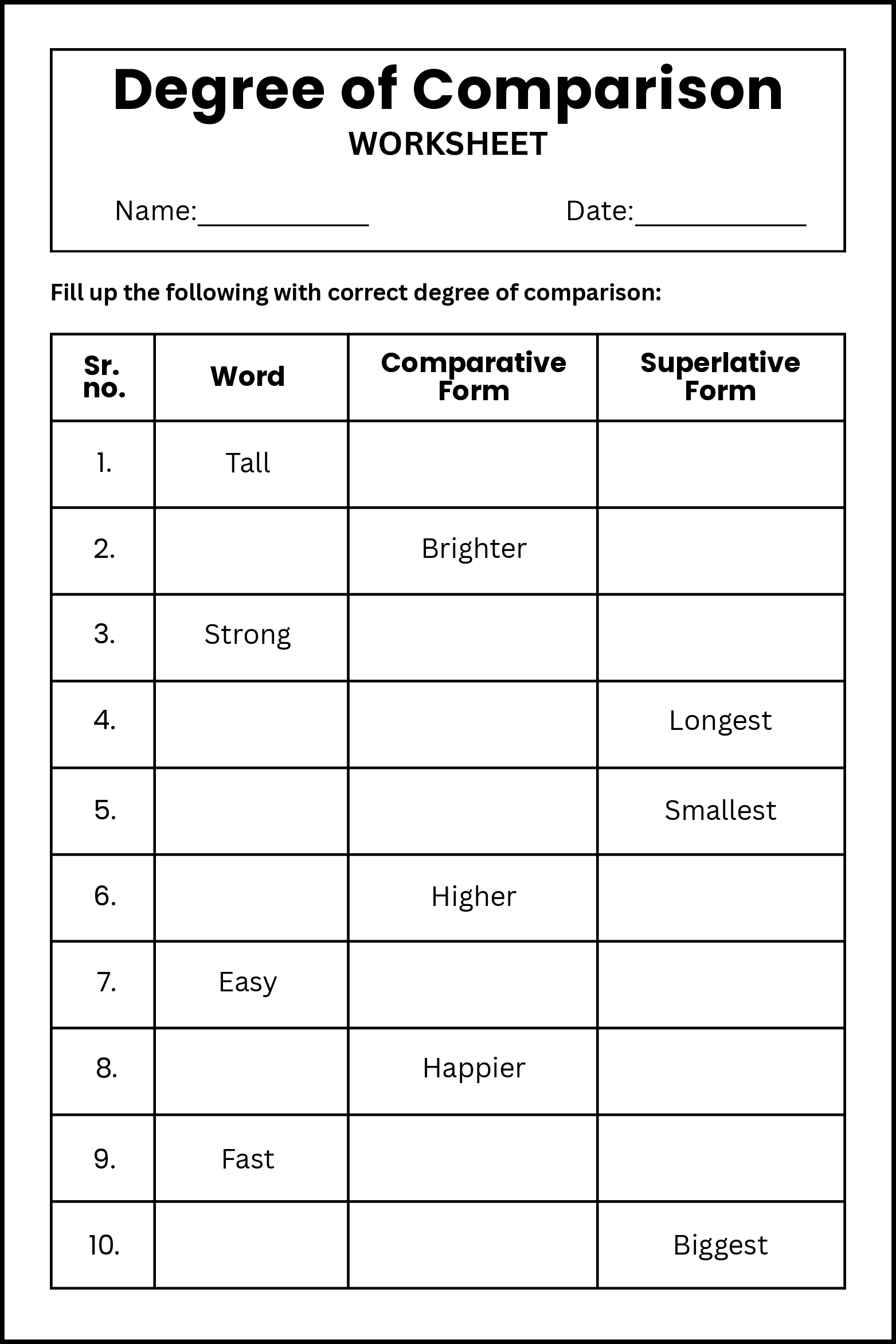
This worksheet introduces students to the basics of degrees of comparison. It asks them to complete a table with positive, comparative, and superlative forms. The page has a mix of prompts. While some words are in base adjectives, others are in comparative or superlative forms. Hence, students think in all directions.
This worksheet strengthens understanding of how adjectives change based on comparison. It also helps them recognize patterns like adding -er and -est. They also understand the usage of more and most. Teachers and parents can use this one to build a strong foundation.
Worksheet 2
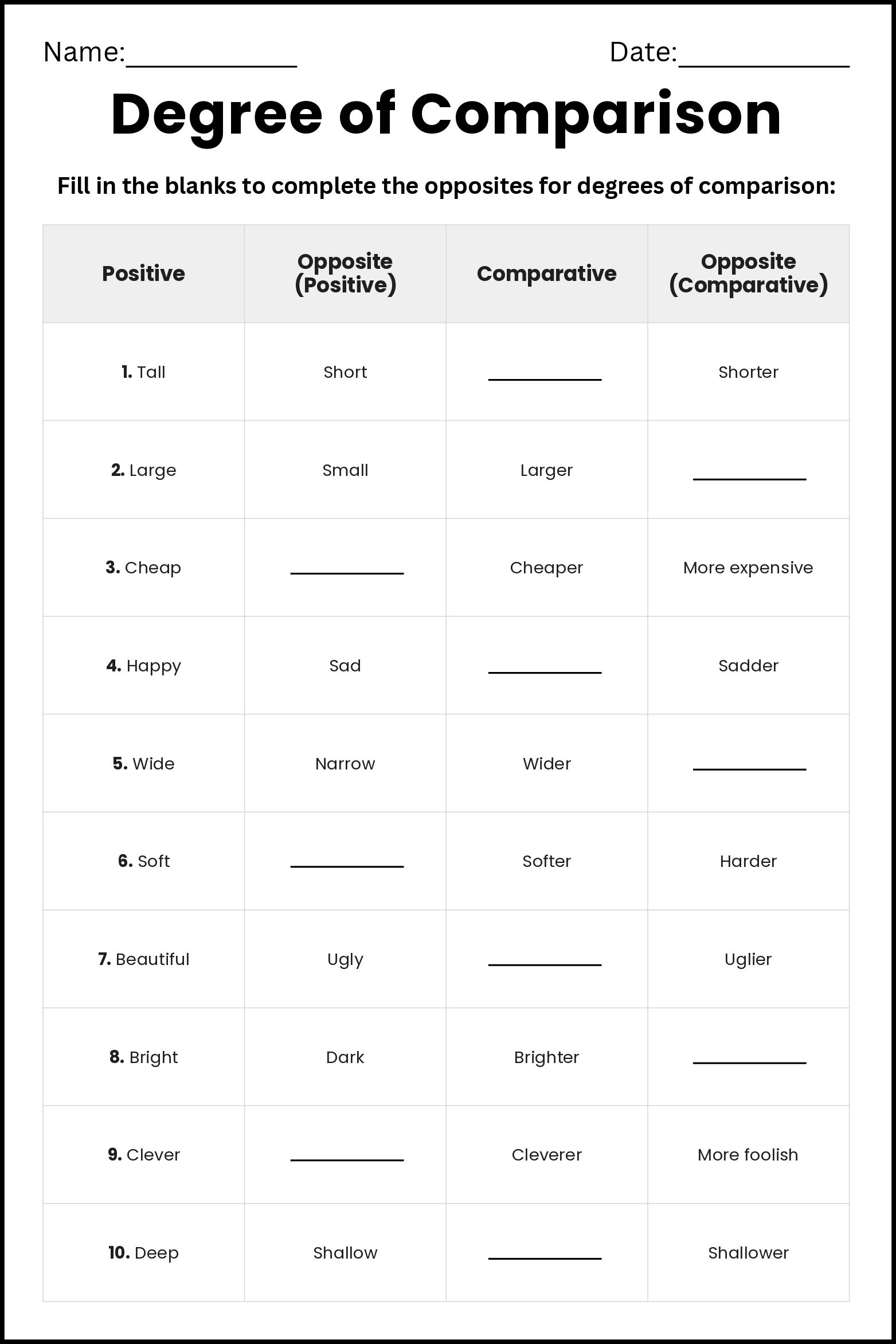
It is common for students to write the comparative and superlative forms on the given works. However, this worksheet encourages them to understand the relationship between adjectives and their opposites. Children need to fill in missing opposites and corresponding comparative words.
With this worksheet, they can develop an understanding of meaning and comparison. The dual approach enhances both vocabulary and grammar skills. It encourages students to think critically about word relationships. The structured format makes it easy to think and gain clarity on the subject matter.
Worksheet 3
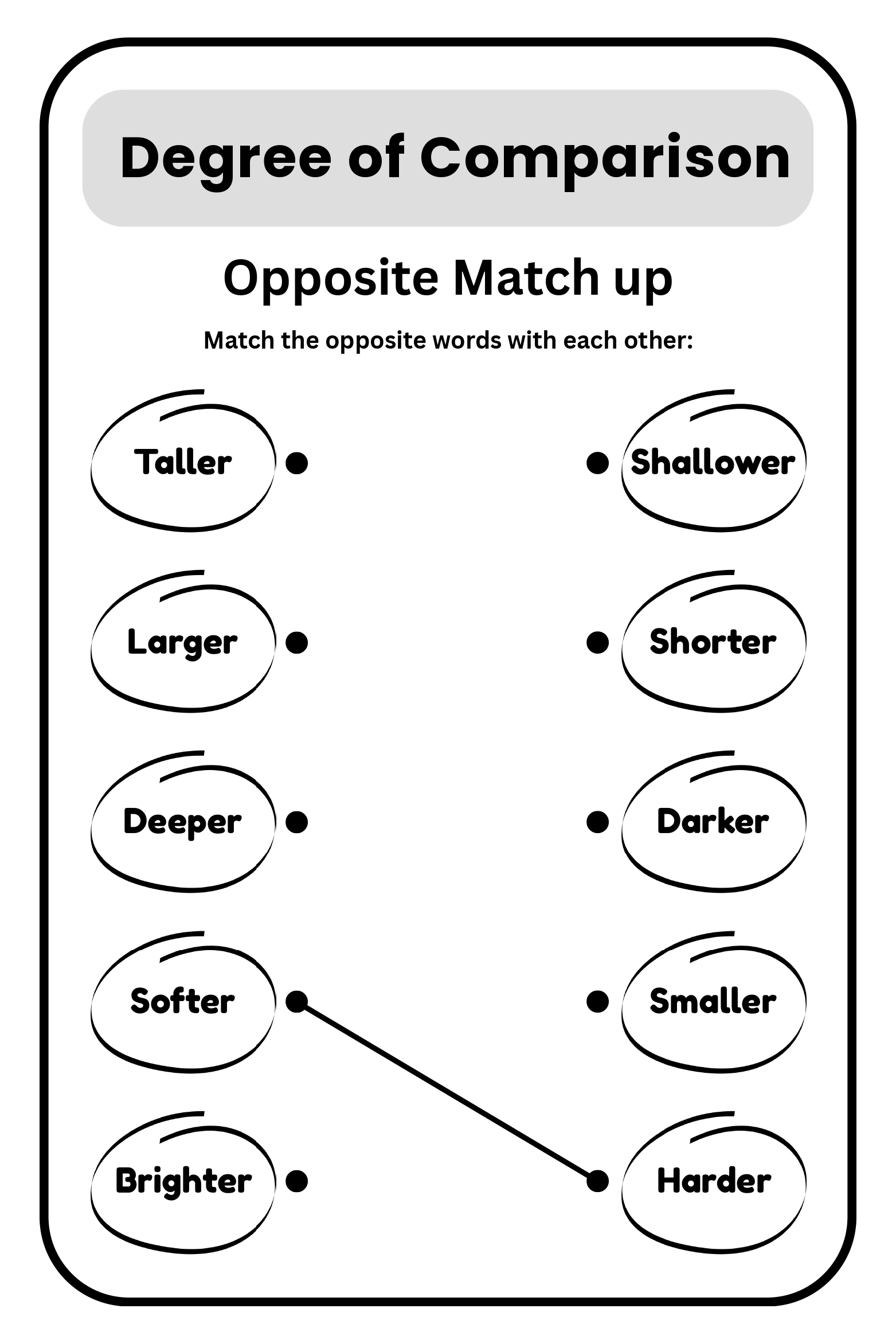
Here is another fun activity in the set of degree of comparison worksheets. It helps students connect comparative adjectives with their correct opposites. The visually engaging design encourages active participation. Students need to draw lines between words like “taller–shorter” or “brighter–darker.”
Such an activity reinforces their understanding of opposites in a fun way. Its page is especially helpful for visual learners, as it combines recognition with movement. You can also divide students in teams and see which team is the quickest in completing the matches.
Worksheet 4
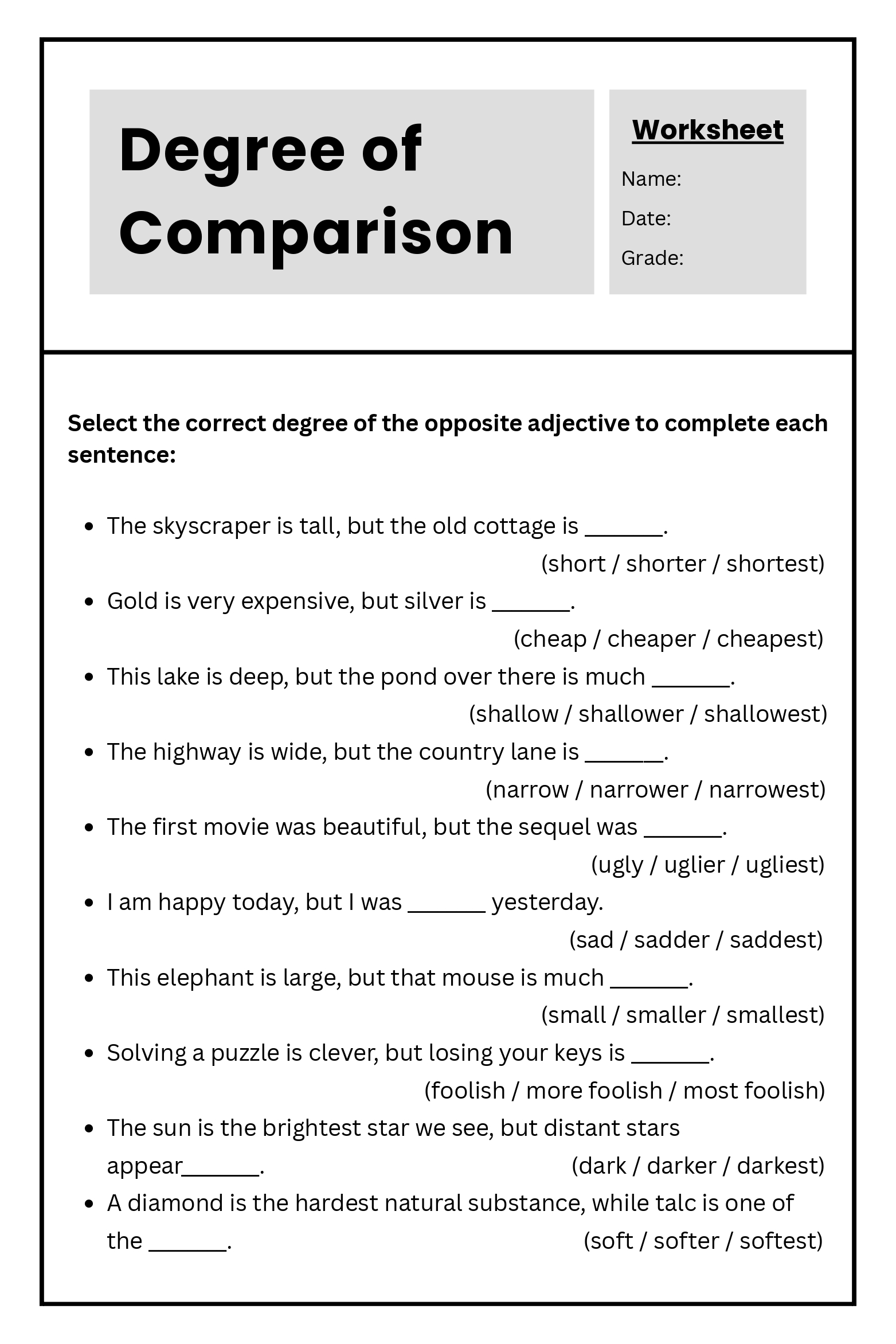
A major missed point in learning a degree of comparison is its practical application. While students might know the forms of adjectives, they might not know how to form sentences. So, this worksheet focuses on applying degrees of comparison in real sentences.
It has multiple-choice options. Children need to select the correct adjective form based on context. It helps them understand when to use positive, comparative, or superlative forms naturally. As they build sentences, they also improve grammar usage.
Teachers and parents can use this worksheet in sentence building activities for a fun learning environment. It also builds confidence as it mimics real-life language use rather than isolated word practice.
Worksheet 5
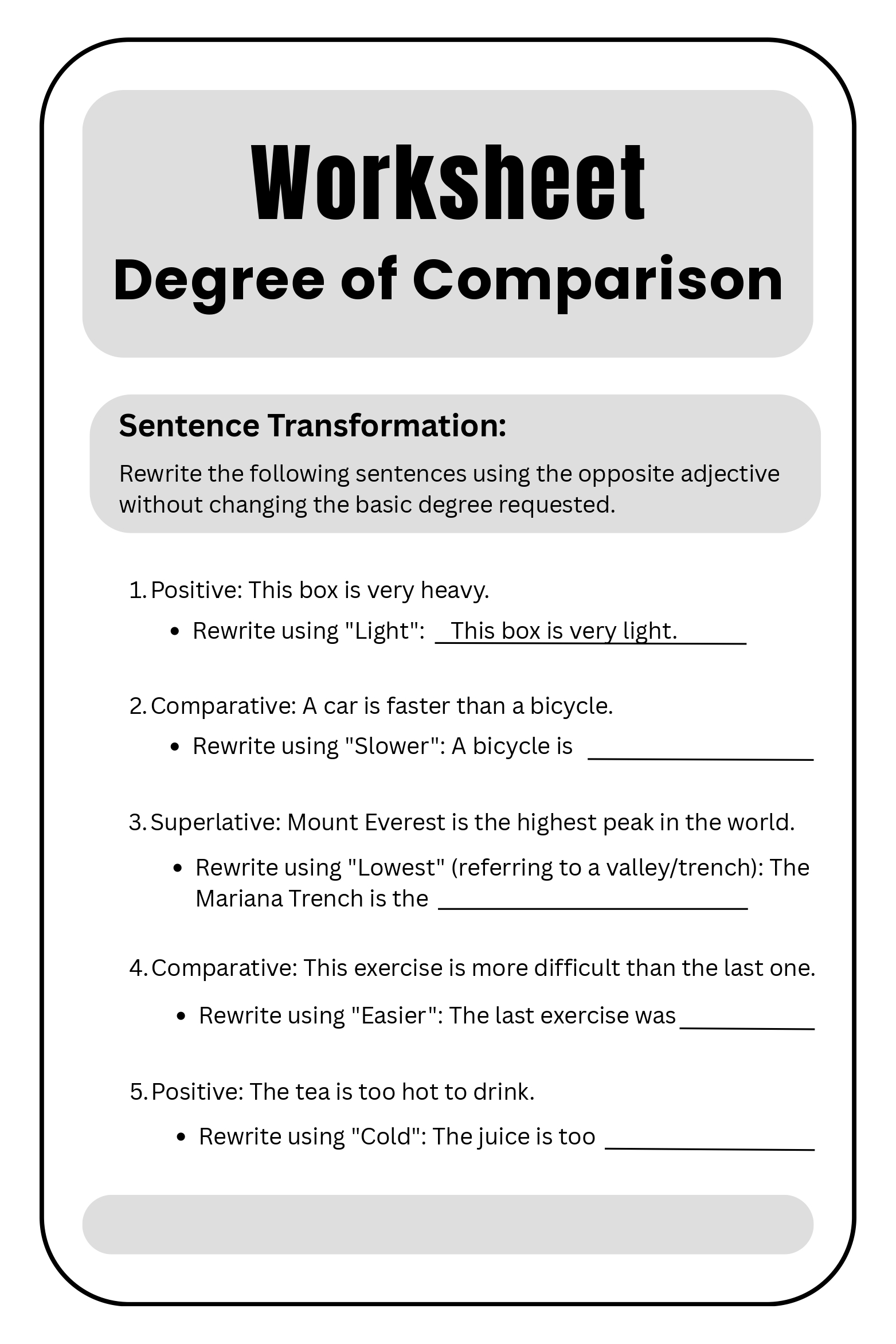
Here, students get an opportunity to practice rewriting sentences using a different degree of comparison. They learn how to not change the meaning yet use another degree. This challenges students to think more deeply about sentence structure. It also strengthens their ability to switch between positive, comparative, and superlative forms.
As students learn to transform the sentences, they can smartly use degrees of comparison in everyday life. It enhances grammar skills and flexibility in language use. The worksheet also encourages careful reading and strong writing skills.
Worksheet 6
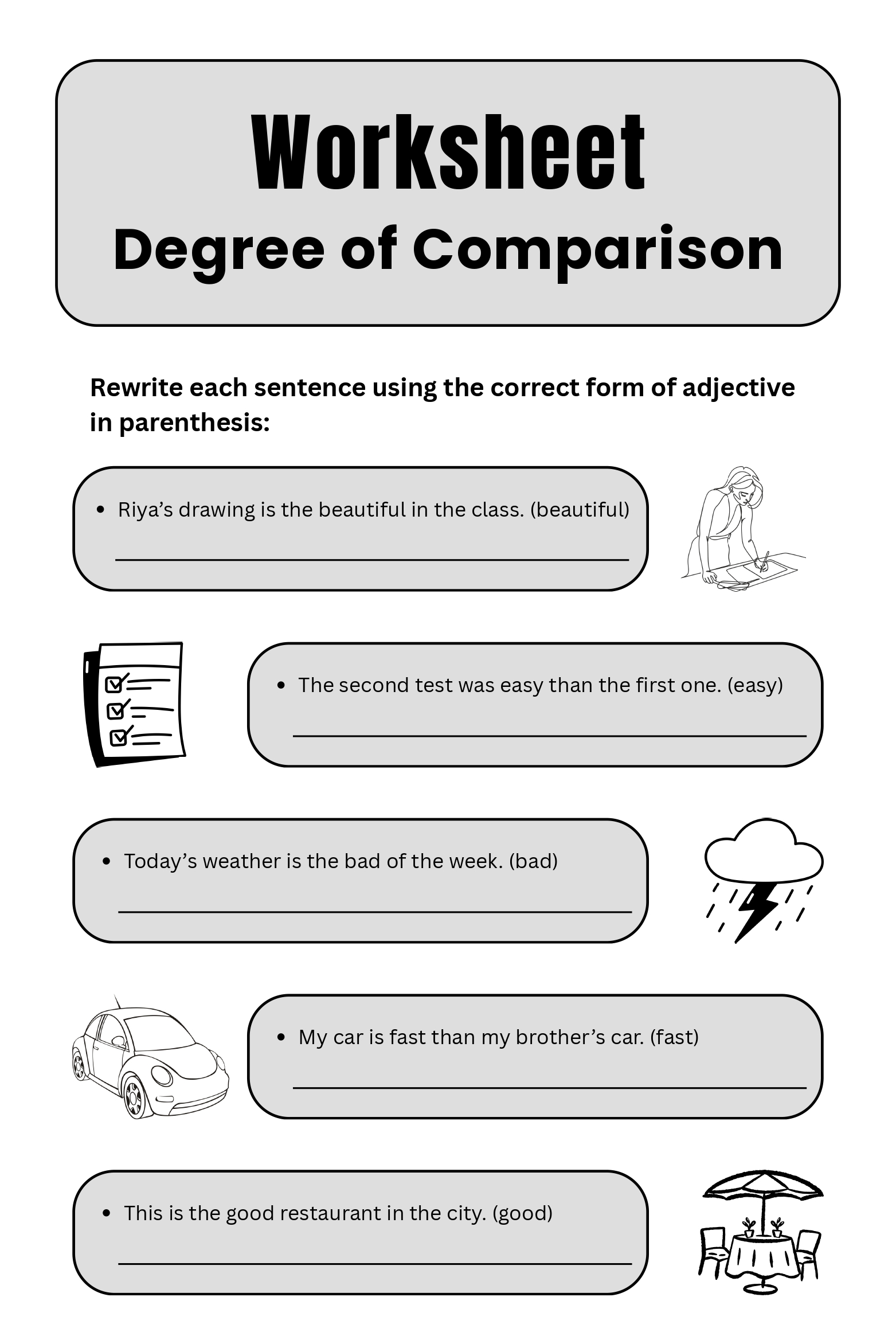
At times, children might use a wrong degree when talking to someone or understanding sentences. This worksheet helps them identify and correct errors in sentences. They need to think of the right degree of comparison to complete the sentence.
By spotting mistakes in the degree forms, students sharpen their grammar awareness. This worksheet also develops critical thinking as students pay attention to detail. Practicing error correction builds confidence. Hence, this is a crucial part for learning degrees.
Worksheet 7
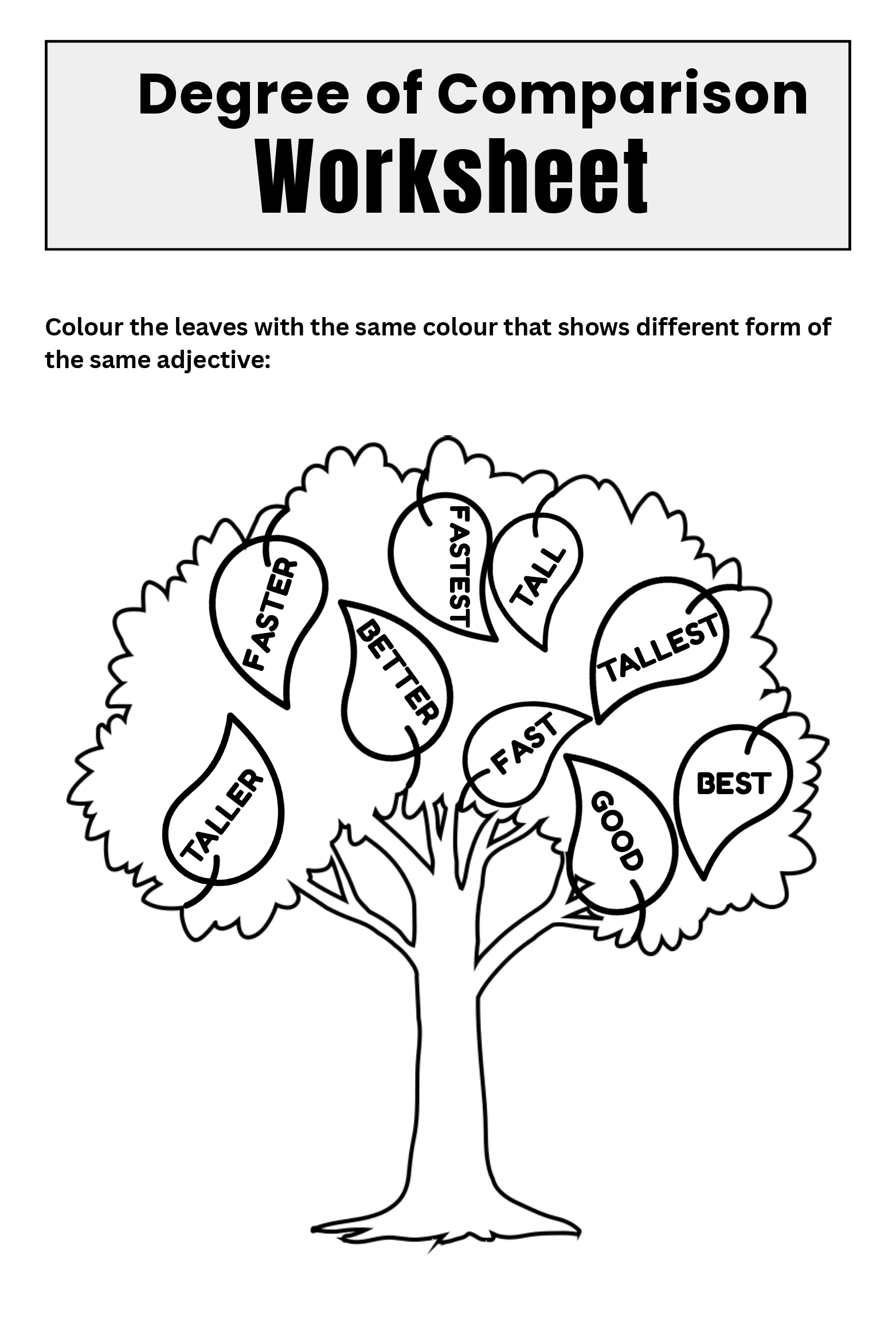
How do we compare things in everyday life? We generally say one car is faster or one building is the tallest. This worksheet helps students understand exactly that! It has a tree filled with different adjective forms. Students need to color leaves that belong to the same comparison group.
This worksheet focuses on real usage by helping recognize how the same adjective changes when comparing. It strengthens their ability to correctly choose words while speaking or writing. The grouping also makes it easier to remember patterns.
Worksheet 8
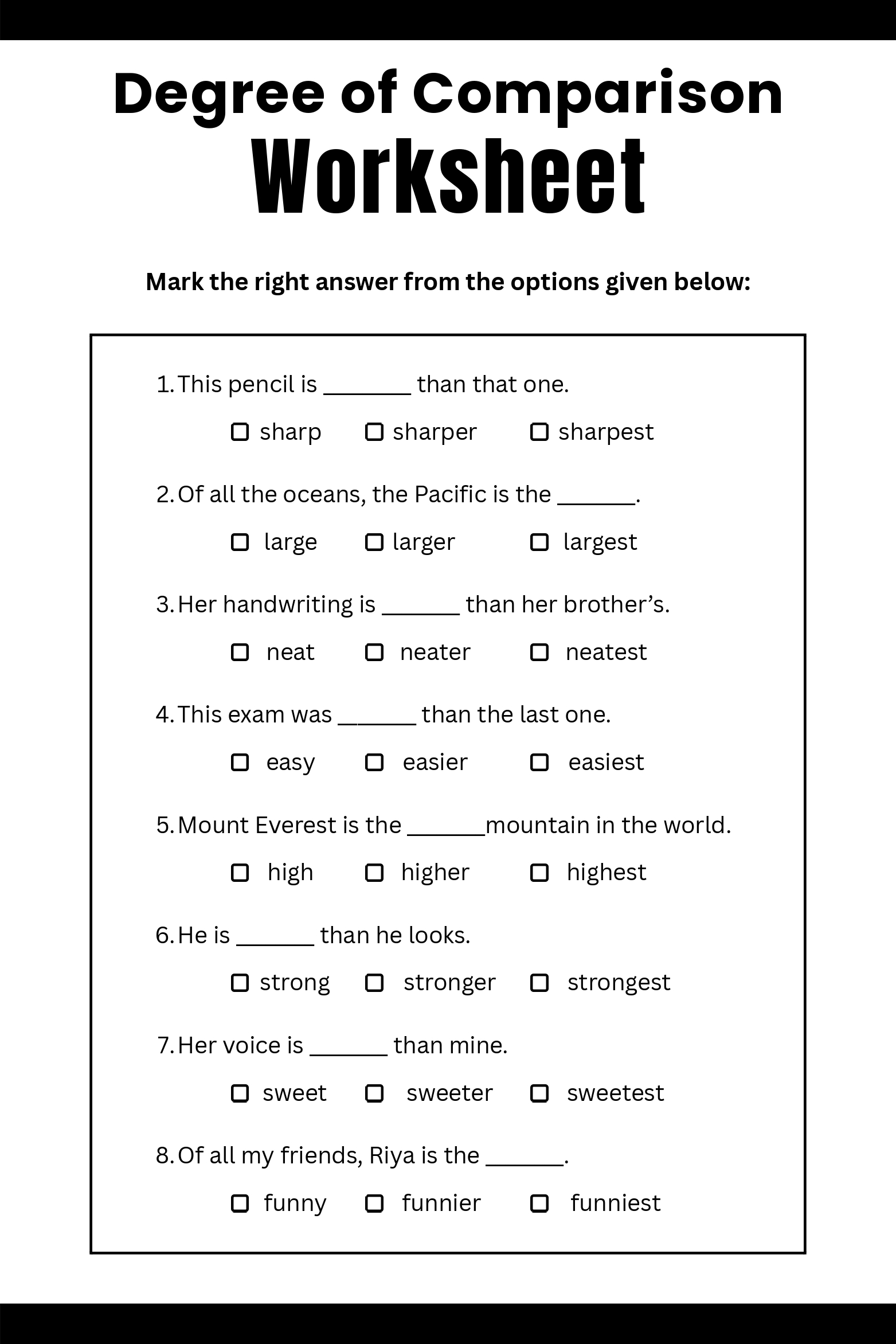
Have you ever wondered which word fits best when comparing things? Children might get confused when making a choice. That’s when this worksheet helps them practice the comparisons. They need to read real-life sentences and choose the correct form of the adjective from the given options.
The focus here is on correct usage in everyday situations. It is especially helpful when comparing objects, places, or people. By selecting the right answer, students understand when to use comparative or superlative forms. It is indeed a great way to turn grammar rules into practical language use.
Worksheet 9
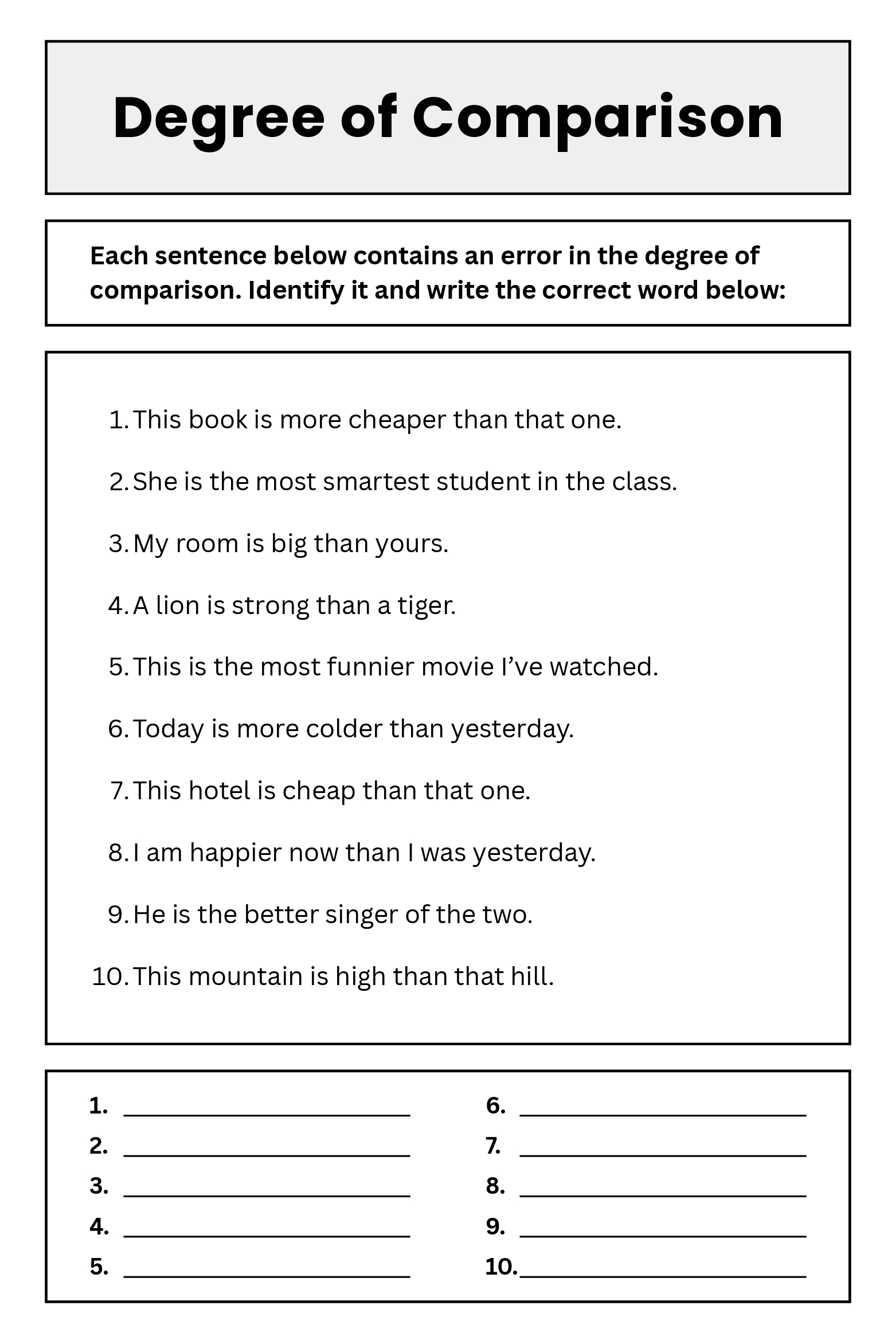
Understanding how comparisons work in sentences is an important grammar skill. This page helps students improve their knowledge on the subject. Each sentence includes an error in the degree of comparison. Students need to identify, correct, and write it below.
This worksheet focuses on showing common mistakes. It helps students discover incorrect sentence structures. So, they develop a clearer understanding of how adjectives should be used in sentences. It also sharpens their editing and proofreading skills.
Worksheet 10
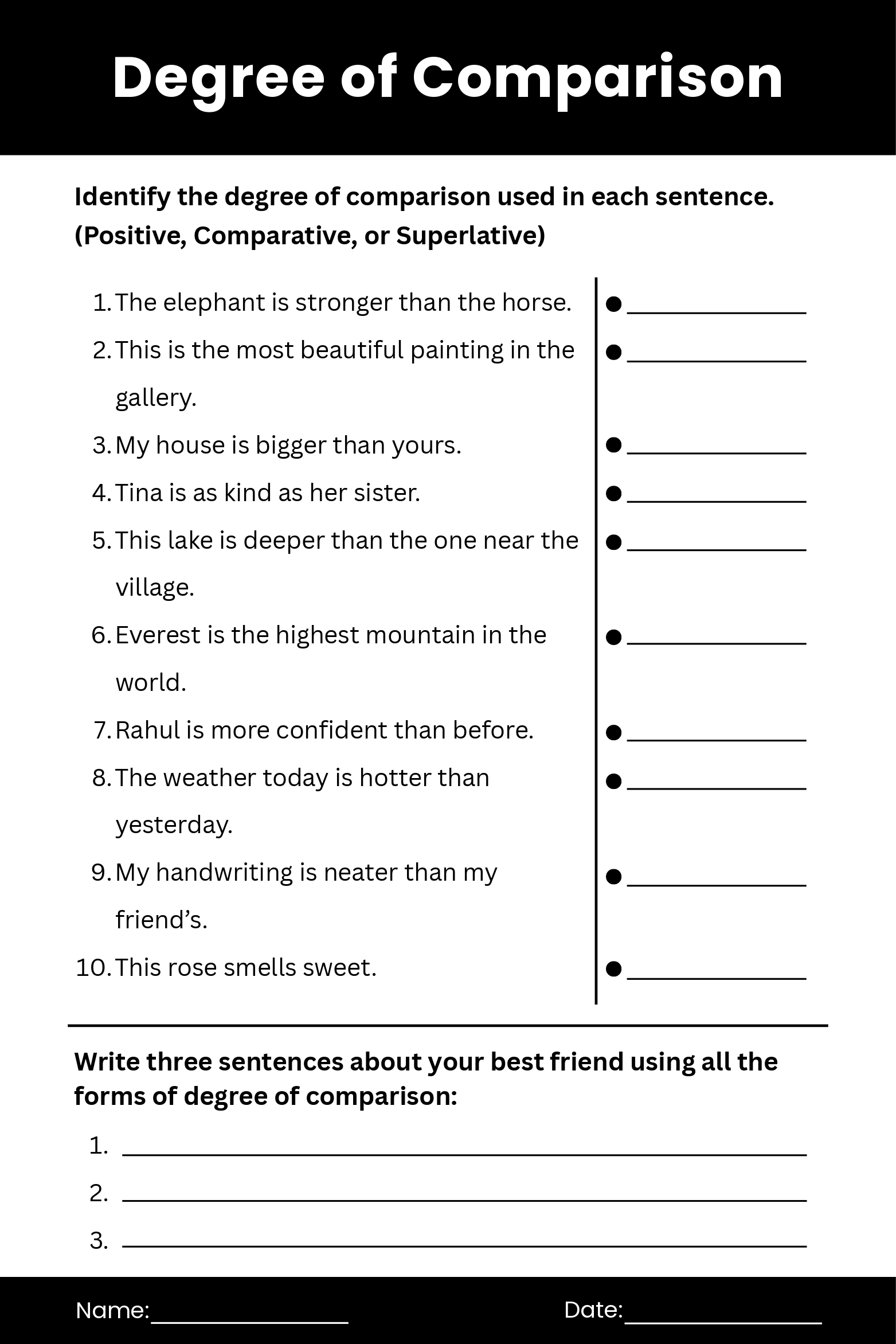
Students use different forms of adjectives every day without even noticing! This worksheet helps them understand how these forms are used in real sentences. They need to read each sentence and identify the form (positive, comparative, or superlative).
Such a worksheet builds clarity on when and why each form is used. It goes beyond just identification by helping students learn everyday communication. The final task encourages them to create their own sentences. So, they get an opportunity to apply what they have learned.
Wrapping Up
Understanding degrees of comparison is a significant step in building strong language skills. With the help of degree of comparison worksheets, students become more comfortable using the correct word forms in different contexts. It also aligns well with grammar games and activities for adults, making them versatile. So, make sure to practice regularly. Inspire children to apply these concepts in everyday communication for the best learning impact.
