

Sometimes mindfulness sounds much harder than it really is. You don’t always need a quiet room, 30 minutes of meditation, or perfect focus. A few mindful breaths, noticing the sounds around you, or even paying closer attention while drinking your morning tea can count.
Best thing—it can fit into almost any part of your day. You can practice it while walking, eating, working, studying, drawing, listening to music, or simply sitting quietly for a few moments. There is no single “right” way to do it.
In this post, you’ll find 25+ easy mindfulness activities that you can try on your own or with others. Some take only a minute or two, while others are a little more creative. At the end, you’ll also find a collection of bonus mindfulness worksheets that you can print and use whenever you need them.
So, What Exactly Is Mindfulness?
Mindfulness is simply about paying attention to what is happening right now instead of getting completely caught up in the past, the future, or everything else competing for your attention.
That might mean noticing your breathing, listening carefully to a sound, paying attention to how your body feels, or realizing what thoughts are running through your mind.
And no, you don’t have to clear your mind completely. Thoughts will still pop up. The idea is to notice them and gently bring your attention back to the present moment.
Mindfulness in Simple Words
Think of mindfulness as being fully present for what you’re doing.
For example, imagine you’re eating an apple while scrolling through your phone. You might finish the entire apple without really noticing its taste. Now imagine putting the phone away and paying attention to the crunch, sweetness, smell, texture, and even how you feel while eating it. That’s mindfulness.
The same thing can happen with almost anything.
When you’re walking, notice your steps. When someone is talking, really listen to them. When you’re outside, take a moment to notice the sky, the breeze, or the sounds around you.
In other words, mindfulness is less about doing something extra and more about paying attention to what you’re already doing.
Why Practice Mindfulness?
Our attention gets pulled in a lot of directions throughout the day. We’re thinking about what happened earlier, worrying about what comes next, checking notifications, jumping between tasks, or simply getting lost in our thoughts.
Mindfulness gives you a chance to pause.
Regular mindfulness practice may help you become more aware of your thoughts, feelings, surroundings, and everyday experiences. It can also be a simple way to create a little more space between what happens and how you respond to it.
And you don’t need to spend hours practicing. Even a short mindful moment can be a useful reset.
Do You Really Need to Meditate to Be Mindful?
Not at all.
Meditation is one way to practice mindfulness, but it isn’t the only way. You can be mindful while taking a walk, eating lunch, coloring, washing dishes, listening to music, or even brushing your teeth.
For some people, sitting quietly and focusing on their breath feels natural. For others, a hands-on activity works much better. That’s why this list includes a mix of breathing exercises, sensory activities, movement, creative ideas, everyday tasks, and simple ways to slow down.
The best mindfulness activity is often the one that feels easy enough for you to actually try.
Easy Mindfulness Activities You Can Try Right Now
You don’t need much preparation to practice mindfulness. In fact, some of the simplest activities can be done almost anywhere, whether you have a few quiet minutes to yourself or just need a quick reset in the middle of a busy day.
Try the activities below and see which ones feel most natural to you. You don’t have to do all of them, and there is no need to get them “perfect.”
1. Take Three Slow Breaths
Let’s start with something really simple. Pause whatever you’re doing and take three slow, comfortable breaths.
As you breathe in, notice the air moving through your nose or mouth. As you breathe out, pay attention to the feeling of your breath leaving your body. You don’t need to force your breathing to be extra deep. Just slow down enough to notice it.
Three breaths may not sound like much, but they can give you a small pause before you jump back into whatever comes next.
2. Try the 5-4-3-2-1 Exercise
The 5-4-3-2-1 exercise is a simple way to bring your attention back to the present moment by using your senses.
Look around and notice:
- 5 things you can see
- 4 things you can touch or feel
- 3 things you can hear
- 2 things you can smell
- 1 thing you can taste
Take your time with each one instead of rushing through the list. You can do this sitting at your desk, walking outside, or whenever you feel like your mind is somewhere else.
3. Listen to the Sounds Around You
Pause for a moment and simply listen.
What can you hear right now? Maybe there is traffic outside, a fan humming, birds in the distance, someone talking, or even the sound of your own breathing.
Try not to label the sounds as good or bad. Just notice them as they come and go. You might be surprised by how many sounds you usually tune out.
4. Notice What You Can See
Choose a spot around you and really look at it.
Instead of giving something a quick glance, notice its colors, shapes, patterns, textures, shadows, and little details. You could look at a tree, a room, a building, a cup on your desk, or anything else nearby.
This is a great activity when you want to slow down without having to close your eyes or sit still.
5. Do a Quick Body Scan
Get comfortable and bring your attention to your body.
Start at your head and slowly move your attention downward. Notice how each part feels without trying to change it. Are your shoulders tense? Is your jaw relaxed? Do your feet feel warm or cool? Are you sitting comfortably?
You don’t need to fix anything you notice. The goal is simply to become a little more aware of what’s happening in your body.
6. Count Your Breaths
Find a comfortable position and start counting each breath.
You might count each complete breath from 1 to 10 and then start over. When you realize your mind has wandered and you’ve lost count, that’s completely okay. Simply start again at 1.
The point isn’t to see how high you can count. It’s about noticing when your attention drifts and gently bringing it back.
7. Focus on One Thing for a Minute
Choose one ordinary thing and give it your full attention for just one minute.
It could be a pen, a cup, a plant, a sound, a book, or even the feeling of your feet on the floor. Notice as many details as you can without reaching for your phone or moving on to something else.
One minute can feel surprisingly long when you aren’t constantly switching your attention.
8. Sit Quietly and Notice What Comes Up
Find a comfortable place to sit and give yourself a few quiet minutes.
You don’t have to meditate or empty your mind. Just notice what happens. Maybe a thought pops up, you hear a sound, you remember something you need to do, or you notice an emotion.
Instead of getting caught up in everything that comes to mind, simply acknowledge it and let your attention return to the present. There is nothing you need to accomplish here. You’re just giving yourself a chance to pause and notice.
Mindfulness Doesn’t Have to Mean Sitting Still
When people hear the word “mindfulness,” they often picture someone sitting quietly with their eyes closed. That can certainly be one way to practice it, but it isn’t the only way.
You can be mindful while you’re moving, eating, showering, drinking your favorite beverage, or spending time outside. Sometimes these everyday activities are even easier places to start because you’re already doing them anyway.
Go for a Mindful Walk
The next time you go for a walk, try putting your phone away and paying attention to the walk itself.
Notice how your feet feel as they touch the ground. Pay attention to your pace, your breathing, the movement of your arms, and what you can see around you. You might notice the weather, the trees, the sounds of traffic, or people passing by.
There’s no need to walk slowly or change your usual route. Just give yourself a chance to actually experience the walk instead of getting lost in your thoughts.
Try Some Mindful Stretching
Take a few minutes to stretch and pay attention to how your body feels as you move.
Notice the muscles that are stretching, the feeling of tension and release, and how your breathing changes. Move gently and don’t worry about how flexible you are.
The goal isn’t to get the perfect stretch. It’s simply to stay aware of your body instead of rushing through the movements.
Eat One Snack Slowly
Pick a snack and try eating it without scrolling, watching something, or doing another task at the same time.
Before taking the first bite, notice how it looks and smells. Then pay attention to its texture, flavor, and the way it feels as you chew. Try slowing down instead of automatically reaching for the next bite.
You might find that you notice flavors and details you usually miss when you’re eating on autopilot.
Take a Mindful Shower
A shower can become a surprisingly easy mindfulness activity because there are already so many sensations to notice.
Pay attention to the temperature of the water, the sound it makes, the scent of your soap or shampoo, and the feeling of the water on your skin. When your mind starts planning the rest of your day, gently bring your attention back to what you’re experiencing.
You don’t need to make your shower longer. Just try to be more present during the one you’re already taking.
Drink Your Coffee or Tea Mindfully
Instead of drinking your morning coffee or tea while checking messages or rushing through your to-do list, give it a little more attention.
Notice the warmth of the cup, the smell of the drink, its taste, and how it feels as you take each sip. Take a moment to enjoy it without trying to do something else at the same time.
Even a few mindful sips can turn an ordinary part of your routine into a small pause.
Spend a Few Minutes in Nature
You don’t need to plan a special trip to practice mindfulness outdoors. A nearby park, garden, backyard, balcony, or even a tree-lined street can work.
Take a few minutes to notice what’s around you. Look at the colors and shapes, listen to the sounds, feel the breeze or sunlight, and notice any smells.
Try to experience your surroundings rather than simply passing through them.
Put on Music and Really Listen
Choose a song you enjoy and listen to it without doing anything else for a few minutes.
Rather than having the music play in the background, pay attention to the different sounds. Can you hear the beat, individual instruments, changes in volume, or different layers that you hadn’t noticed before?
You can even close your eyes and see how the music makes you feel. Let yourself simply listen from beginning to end without reaching for your phone or skipping to another song.
Get a Little Creative With Mindfulness
Mindfulness doesn’t always have to involve breathing exercises or sitting quietly. Creative activities can be a great way to slow down too, especially when you enjoy making things with your hands.
The idea is not to create something perfect or impressive. Instead, let yourself focus on what you’re doing and notice the little details along the way.
Try Mindful Coloring
Grab some colored pencils, crayons, or markers and choose a page to color.
As you color, pay attention to the movement of your hand, the colors you’re choosing, and the way the page gradually comes together. Notice when your mind wanders and gently bring your attention back to the colors and patterns in front of you.
Don’t worry about staying inside the lines or choosing the “right” colors. There are no rules here.
Doodle Without a Plan
Take a blank piece of paper and start doodling without deciding what you’re going to draw.
Make circles, lines, shapes, patterns, or whatever comes to mind. Instead of thinking about what the finished drawing should look like, focus on the movement of your pen or pencil.
It’s a simple way to give your busy mind something quiet to focus on.
Make a Mindfulness Jar
Find a small jar or container and fill it with little reminders to pause and be present.
You could write simple prompts on slips of paper, such as “Take three deep breaths,” “Notice five things around you,” “Listen to the sounds nearby,” or “Think of one thing you’re grateful for.”
Whenever you need a quick mindfulness break, pick one and give it a try. You can keep adding new ideas as you discover activities you enjoy.
Go on a Texture Hunt
This one can be done almost anywhere.
Look for different textures around you and take a moment to notice how each one feels. You might find something smooth, rough, soft, bumpy, cold, warm, or fuzzy.
You can do this at home, outdoors, or even at a desk. The goal is simply to slow down and really pay attention to the sense of touch.
Create a Simple Mindful Mandala
A mandala is a circular design made from repeating shapes, lines, or patterns. You can draw one from scratch or start with a simple template and fill it in.
As you work, focus on the shapes you’re creating and the patterns you see. Let yourself move at a comfortable pace without worrying about how the finished mandala looks.
It can be a relaxing way to spend a few quiet minutes while keeping your attention anchored to something right in front of you.
When Your Mind Feels Busy, Try These
Sometimes your mind just won’t slow down. You may have too many things to think about, feel stuck in a loop of thoughts, or simply feel like you need a little breathing room.
You don’t always have to figure everything out right away. A small pause can sometimes be enough to help you step out of the mental clutter for a moment.
Pause and Take a Breath
When you notice your thoughts starting to pile up, stop for a moment and take a slow breath.
Breathe in gently and pay attention to the feeling of the air entering your body. Then breathe out slowly and notice the release. Repeat this a few times, without worrying about making each breath perfect.
You aren’t trying to make every thought disappear. You’re simply giving yourself something calm and steady to focus on for a moment.
Name What You’re Feeling
Sometimes it helps to put a simple name to what’s going on inside you.
Are you feeling frustrated, worried, excited, overwhelmed, tired, or maybe a mixture of several things? You don’t have to explain why you feel that way. Just acknowledge it.
You can quietly say, “I’m feeling stressed right now,” or “I’m feeling a little overwhelmed.” Naming the feeling can help you step back and notice it instead of getting completely caught up in it.
Slowly Relax Each Part of Your Body
Find a comfortable position and bring your attention to your body.
Start with your forehead and face, then move down through your neck, shoulders, arms, hands, chest, stomach, legs, and feet. As you go, notice any areas that feel tense or tight.
Take a slow breath and see whether you can gently relax each area. There’s no need to force anything. Simply noticing where you’re holding tension can help you become more aware of what your body is doing.
Give Yourself a One-Minute Reset
When everything feels like too much, give yourself just one minute to stop.
Put down whatever you’re doing, take a few comfortable breaths, and notice what’s around you. Feel your feet on the floor, look at something nearby, and listen to the sounds around you.
For that one minute, you don’t need to solve a problem, finish a task, or plan what’s next. Just be where you are. When the minute is over, you can return to what you were doing with a little more space in your mind.
Mindfulness You Can Do in Five Minutes or Less
You don’t need a big block of free time to practice mindfulness. Sometimes five minutes is plenty, and even one quiet minute can give you a chance to step away from the rush of the day.
These quick activities are easy to fit into a break, between tasks, before starting work, or whenever you feel like slowing things down for a moment.
5 Things You Notice
Stop for a moment and look around you. Instead of simply glancing at your surroundings, choose five things and really notice them.
They could be anything—a plant, a window, a pattern on the floor, a sound outside, or the feeling of your feet against the ground. Spend a few seconds with each one and notice a detail you may normally overlook.
This can be a simple way to bring your attention back when your thoughts are somewhere else.
One-Minute Listening Exercise
Give yourself one quiet minute to listen.
You don’t need special music or a completely silent room. Just notice whatever sounds are already around you. Maybe you hear traffic, birds, a clock, people talking, an appliance running, or the sound of your own breathing.
Try to notice the sounds without deciding whether you like them or not. Just listen and see what you can pick up when you stop trying to tune everything out.
Three Things You’re Grateful For
Take a couple of minutes to think of three things you’re grateful for.
They don’t have to be big or extraordinary. It could be a good meal, a funny conversation, a comfortable bed, a sunny morning, a helpful person, or simply having a few quiet minutes to yourself.
You can write them down or just say them silently in your mind. As you do, spend a little time thinking about each one instead of rushing through the list.
Stretch, Breathe, and Reset
Stand up and give your body a gentle reset.
Roll your shoulders, stretch your arms, loosen your neck, or reach your hands toward the ceiling. Keep your movements comfortable and pay attention to how your body feels as you move.
Take a few slow breaths while you stretch, noticing the feeling of each movement. You don’t need a full workout or a complicated routine. A few mindful stretches can be enough to help you pause and reconnect with your body before moving on with your day.
Try Mindfulness With Someone Else
Mindfulness doesn’t have to be something you do alone. In fact, sharing a simple activity with a friend, family member, partner, classmate, or group can make it feel more relaxed and enjoyable.
You don’t need everyone to sit quietly or follow a formal meditation. Sometimes, simply slowing down together and paying attention to what’s happening around you is enough.
Take a Mindful Walk Together
Go for a short walk with someone and agree to put your phones away for a few minutes.
As you walk, pay attention to what you can see, hear, and feel. Notice the path beneath your feet, the weather, nearby sounds, or small details you might normally walk past.
You can talk along the way, but try leaving a few quiet moments too. The goal isn’t to make the walk serious or silent—it’s simply to be more present while sharing the experience.
Do a Five Senses Challenge
Try the five senses exercise together and see what each person notices.
Take turns finding something you can see, hear, touch, smell, and taste. You may even discover that two people can be in exactly the same place and notice completely different things.
This can be especially fun when you’re outside or exploring somewhere new. There’s no right answer, so encourage everyone to share whatever catches their attention.
Share One Thing You Noticed
At the end of a walk, meal, activity, or even an ordinary day, ask everyone to share one thing they noticed.
It could be something they saw, a sound they heard, how they felt, something that made them smile, or simply a detail they hadn’t paid attention to before.
Keep it simple. There is no need to turn it into a long discussion. Sometimes one small observation is enough to make everyone pause and appreciate the moment.
Have a Gratitude Circle
Sit together and take turns sharing one thing you’re grateful for.
It doesn’t have to be something big. Someone might mention a favorite meal, a kind gesture, a sunny day, a funny moment, or simply having time together.
As each person speaks, encourage everyone else to listen without interrupting. It’s a small activity, but it can create a nice pause in the middle of a busy day and help everyone pay attention to something positive.
Don’t Forget About Mindful Journaling
Journaling can be another simple way to slow down, notice your thoughts, and reflect on the moment without overthinking it.
Write Down What You Notice
Jot down a few things you can see, hear, feel, smell, or simply notice around you.
Check In With How You Feel
Pause and write a few words about what you’re feeling without judging or trying to change it.
End the Day With a Mindful Reflection
Before bed, reflect on one moment you enjoyed, noticed, learned from, or felt grateful for.
For more ideas, explore our 100 Mindfulness Journal Prompts to keep your journaling practice going.
Free Mindfulness Worksheets
Want something you can print and actually use? I’ve put together a few simple mindfulness worksheets you can use on your own, at home, or in a classroom.
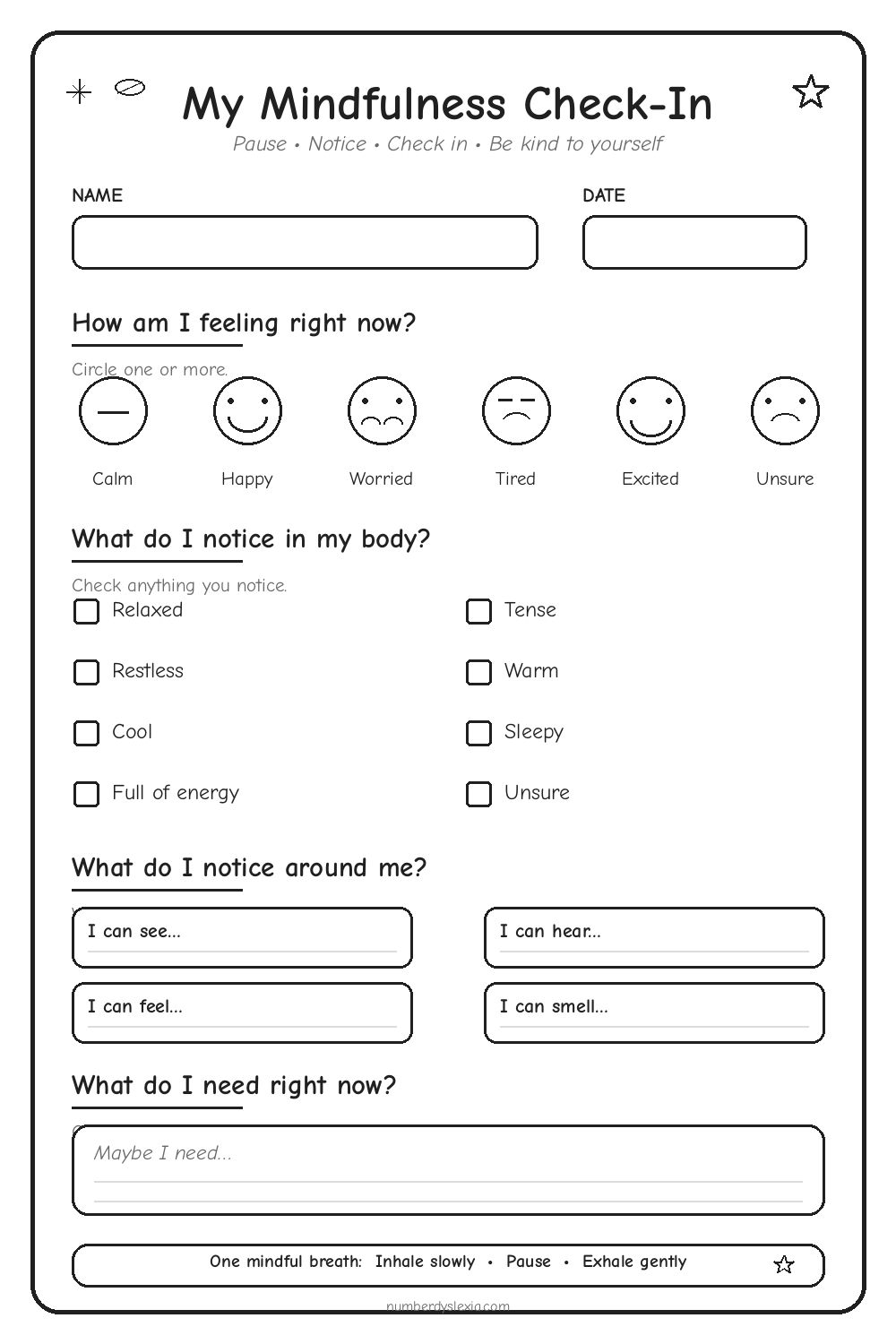
My Mindfulness Check-In
A simple worksheet to pause and check in with your mood, body, surroundings, and what you might need in the moment.
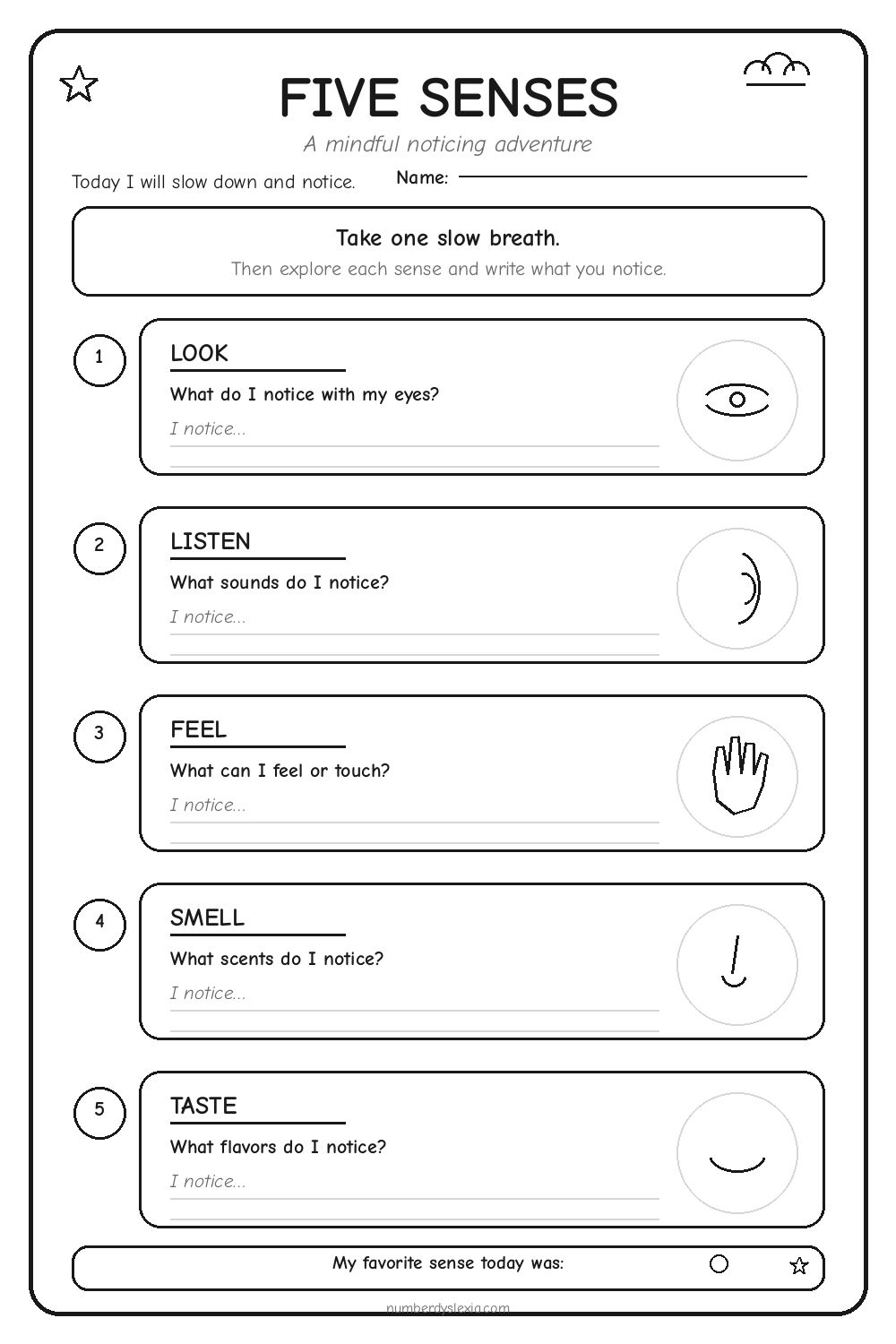
Five Senses Mindfulness Worksheet
Use your five senses to slow down and notice what’s happening around you, from what you can see and hear to what you can touch, smell, and taste.
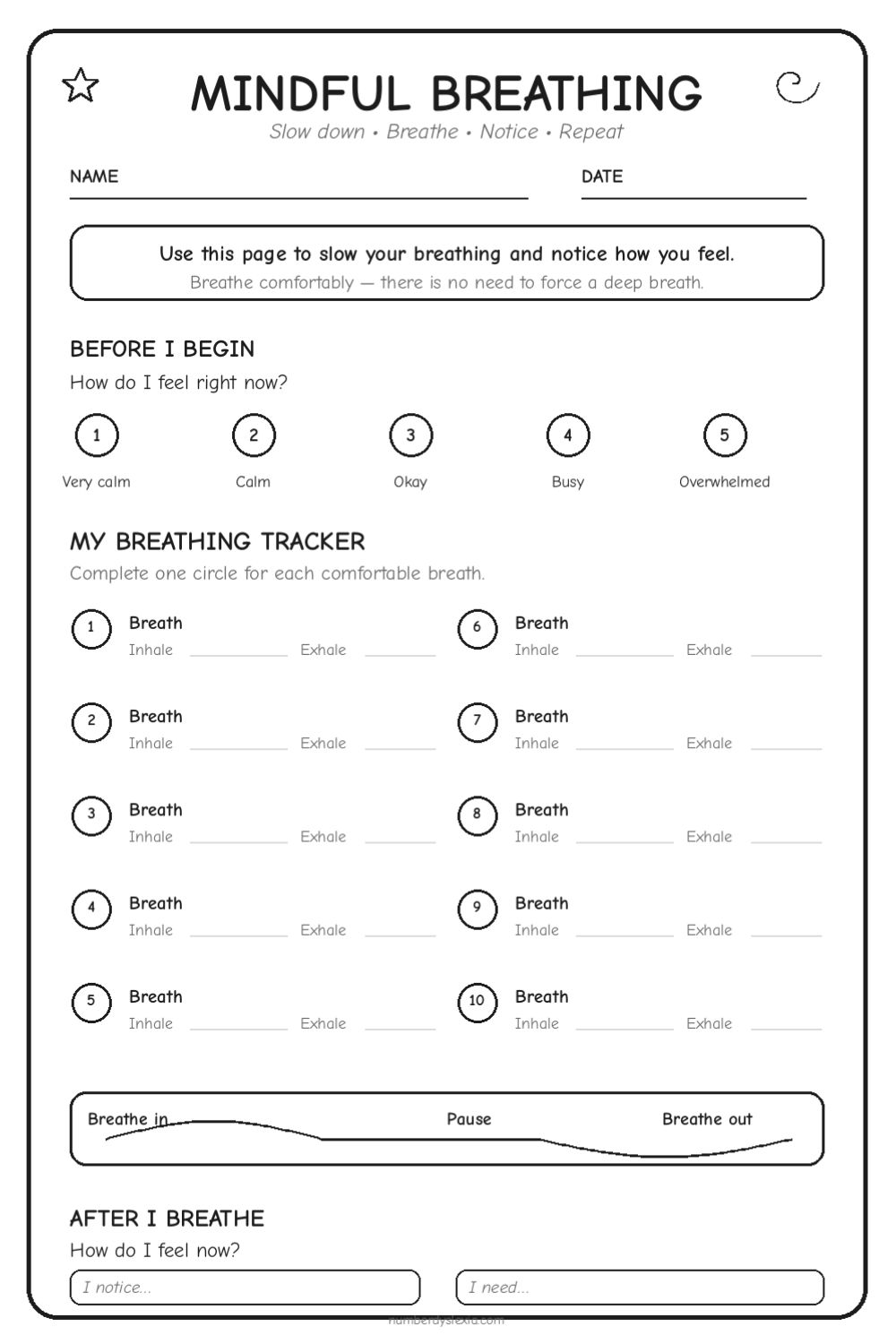
Mindful Breathing Tracker
A simple way to practice mindful breathing while keeping track of your breaths and noticing how you feel before and after.
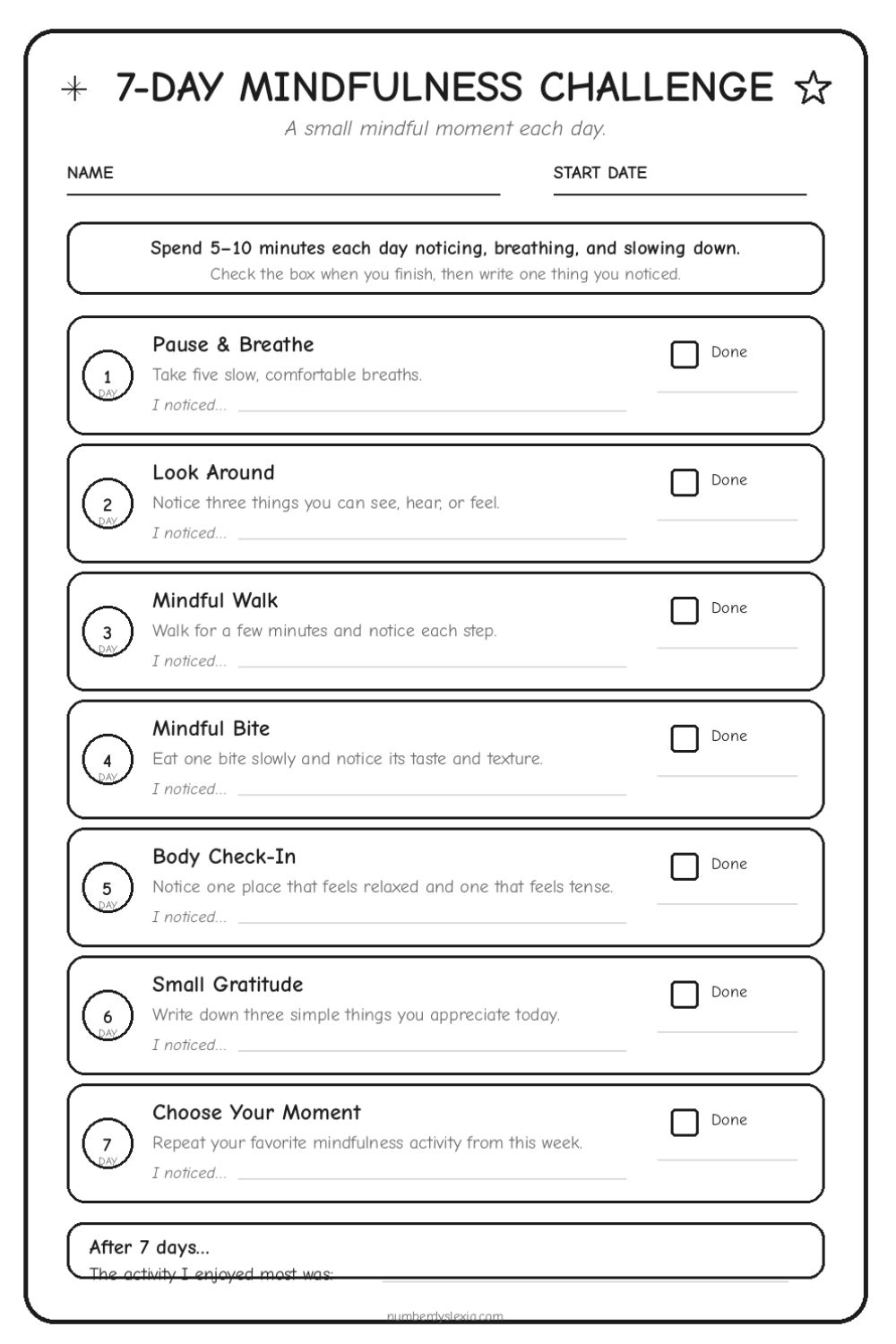
7-Day Mindfulness Challenge
Try one small mindfulness activity each day for a week and see which practices help you feel more present and connected.
How Do I Make Mindfulness a Habit?
Making mindfulness part of your routine doesn’t have to be complicated. A few small changes can make it easier to keep practicing.
Start With One Minute
Begin with just a minute or two and gradually build from there.
Pick Something You Actually Enjoy
Choose activities that feel relaxing, interesting, or enjoyable rather than forcing yourself to do something you dislike.
Attach It to Something You Already Do
Practice mindfulness while having your morning drink, walking, getting ready for bed, or during another regular part of your day.
Don’t Worry About Doing It Perfectly
Your mind will wander, and that’s completely normal; simply notice it and gently return your attention.
Mix Things Up
Try different activities so mindfulness doesn’t start feeling like another repetitive task.
A Few Minutes of Mindfulness Can Go a Long Way
Mindfulness doesn’t have to be another thing on your to-do list. Sometimes it’s just taking one slow breath before answering a question, noticing the taste of your food, listening carefully to a sound, or giving yourself a quiet minute to reset.
You don’t need to try all activities at once, either. Pick one that sounds doable and give it a try today. Maybe a mindful walk is more your thing, or perhaps you’d rather spend a minute noticing your surroundings or writing down what you’re feeling.
And remember, there’s no perfect way to practice mindfulness. Your mind will wander. That’s okay. The simple act of noticing and coming back to the present is already part of the practice.
So, which activity are you going to try first?
Before you go, don’t forget to download the bonus mindfulness worksheets included with this post. Keep them somewhere handy and come back whenever you need a simple reminder to slow down, pause, and be present.
Here’s to finding a few more mindful moments in your day—one breath, one thought, and one small pause at a time.

An engineer, Maths expert, Online Tutor and animal rights activist. In more than 5+ years of my online teaching experience, I closely worked with many students struggling with dyscalculia and dyslexia. With the years passing, I learned that not much effort being put into the awareness of this learning disorder. Students with dyscalculia often misunderstood for having just a simple math fear. This is still an underresearched and understudied subject. I am also the founder of Smartynote -‘The notepad app for dyslexia’,