
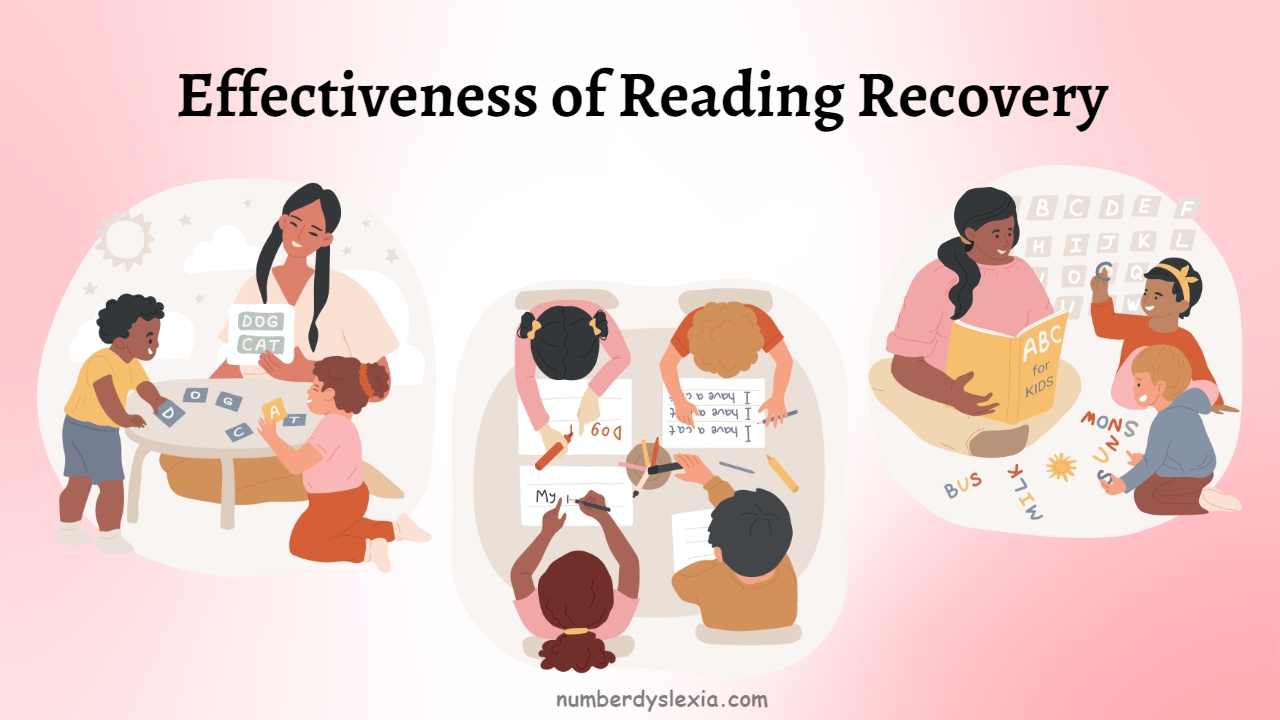
Reading is a crucial skill that provides the basis for learning among children. However, certain students may experience difficulties with reading, leading schools to introduce various interventions to support them. Among these interventions, Reading Recovery is widely recognized as one of the most common. It is a short-term, intensive reading program designed for struggling first-grade readers. Despite its widespread use, there has been an ongoing debate over the effectiveness of Reading Recovery
But why?
In this article, we will delve into the theory and basics of Reading Recovery, explore the concerns raised by international reading researchers, and examine what current studies have concluded about its effectiveness.
First, let’s understand the basics of reading recovery.
Understanding the theory and basis of reading recovery
Reading Recovery is a program that provides early literacy intervention to first-grade students who are experiencing difficulties with reading and writing. It is based on the theory of literacy processing developed by Marie Clay, which suggests that learning to read and write involves several types of reading skills such as phonological awareness, letter-sound relationships, high-frequency words, and meaning-making strategies. These skills may be weak in students who struggle with reading and writing.

Reading Recovery offers personalized instruction to students over a period of 12-20 weeks, with the aim of addressing their weaknesses and helping them catch up with their peers. Specially trained teachers work one-on-one with students, using various strategies to develop their literacy skills. The program is designed to be intensive and short-term, helping struggling students build a solid foundation for successful reading and writing.
The program’s foundation is rooted in extensive research and is based on the belief that literacy development is an active and complex process that requires engaged learning. It also believes that all students can learn to read and write with the help of early intervention and personalized support.
The debate over reading recovery: Concerns raised by international reading researchers
International reading scholars continue to question the efficacy of Reading Recovery, a prominent literacy intervention program for first graders. While the program has provided significant benefits to certain students, a subsequent study has revealed potential hazards and long-term repercussions. More than 30 international reading scholars[1] have expressed reservations about the implementation of Reading Recovery, claiming that it is ineffective and leaves too many learners behind. However, some studies have refuted these assertions and emphasized the program’s potential benefits.
While the Reading Recovery program has received praise for its ability to assist struggling students in catching up with their peers, there are concerns expressed by some scholars about its effectiveness. One criticism of the program is that it may not be effective for all students. While some students may see significant improvement in their reading abilities after completing the program, others may not.
Furthermore, Reading Recovery has been criticized for its high cost of implementation. The program requires substantial investments in resources, such as time, money, and personnel. Some individuals suggest that these resources could be better allocated toward other literacy interventions that have been proven to be more effective.
Despite these concerns, Reading Recovery also has a substantial number of supporters who assert that the program provides significant benefits. The argument concerning the efficacy of Reading Recovery is still ongoing, and there is no clear consensus.
According to Lorraine Hamma[2], a senior lecturer at ECU suggests that while Reading Recovery has some positive effects when compared to no intervention or a mix of interventions, it would be more valuable to compare it with programs that align with reading science and have significant positive effects.
But some teachers had another experience, one of the qualitative study[3] examines the perspectives and experiences of ten Reading Recovery teachers regarding the efficacy of the program as an early intervention for at-risk readers.
The study finds that while the program is well-regarded and implemented as originally prescribed, teachers are not confident about its ability to meet the needs of children with clinical conditions, such as specific reading difficulties. The study raises theoretical, ethical, and clinical implications regarding the suitability of the Reading Recovery program for low-progress readers.
What current studies conclude about Reading Recovery
While many reading games and activities are used for primary students, Reading Recovery is designed to help struggling readers While the program has shown promising results in improving reading skills for some students, a growing body of research suggests that its effectiveness may be limited for others.

A study[4] conducted by James James W. Chapman and William E. Tuner in a classroom found that while some students showed significant improvement after participating in Reading Recovery, others did not experience the same level of success. This was particularly true for struggling students who had difficulty recognizing letters and sounds.
Similarly, a UK-based study[5] suggested that the program’s effectiveness could be increased by adopting a more individualized approach and placing greater emphasis on teaching letter and sound recognition. The study also highlighted the importance of systemic interventions and whole-school initiatives to support the program’s effectiveness.
Moreover, a recent federally funded study[6] reported lower state reading test results for third and fourth-grade students who received Reading Recovery compared to those who did not receive the program. These findings provoke important questions about the effectiveness of Reading Recovery and the broader educational context in which it operates.
On the other side, one of the qualitative reports[7] provided information about a program evaluation for the Reading Recovery program in Maine. Open-ended questionnaires were used to assess the Reading Recovery program, where response rates ranged extremely high from 76% to 100%, The program received generally favorable reviews and support from respondents across all groups, but funding and accessibility for more students were both raised as issues.
Alternatives to reading recovery methods
Alternative strategies might be more suited to the needs of some students. Here are a few instances:
- Phonics-based methods: These methods put a lot of emphasis on teaching letter and sound recognition, a fundamental reading skill. Popular phonics-based curricula include Orton-Gillingham, Wilson Reading System, and Phonics First.
- Multisensory methods: These multisensory approach use a number of senses, including sight, sound, and touch, to aid students in remembering information. Programs like Lindamood-Bell and Visualising and Verbalising are examples of multisensory instruction.
- Approaches based on technology: Technology can be a fun and useful tool for enhancing literacy results. Programs that rely on technology include Raz-Kids, Lexia, and Headsprout.
Collaboration between teachers, parents, and students is a key component of these methods for creating individualized plans that support literacy development, and guided reading strategies that help students to learn better.
Verdict
As of right now, it is impossible to make a definitive judgment about Reading Recovery’s effectiveness as a literacy intervention program. While some studies have documented successful results for particular students, others have expressed concerns about the program’s insufficient efficacy, high cost, and requirement for greater individualization.
Overall, a number of variables, including the particular needs of the students, the resources available, and the way the program is implemented, determine whether or not Reading Recovery is a good program. To offer the best assistance to struggling readers, it is crucial to take into account a variety of literacy interventions and evidence-based techniques that are in line with the most recent findings in reading science.
As such we believe, educators and parents should also consider alternative approaches that are better suited to their students’ needs. Ultimately, the key to improving literacy outcomes for all students is to consider a variety of factors and develop individualized plans that are tailored to meet each student’s unique needs.

An engineer, Maths expert, Online Tutor and animal rights activist. In more than 5+ years of my online teaching experience, I closely worked with many students struggling with dyscalculia and dyslexia. With the years passing, I learned that not much effort being put into the awareness of this learning disorder. Students with dyscalculia often misunderstood for having just a simple math fear. This is still an underresearched and understudied subject. I am also the founder of Smartynote -‘The notepad app for dyslexia’,