

Last Updated on August 3, 2026 by Editorial Team
Ever sat in high school geometry class wondering what trigonometry is used for in real life, or trying to find quick examples of trigonometry to finish a project?
Tracking down practical uses of trigonometry in daily life is actually a lot more exciting than staring at dry sine and cosine ratios on a blackboard.
In simple terms, trigonometry is just the ratio of lengths, angles, and triangles. Originating in ancient Greece, trigonometry is an amalgamation of two words, ‘trigono’ meaning triangle, and ‘metry’ meaning measure.
If we remember correctly, the problems you can see in our math books mostly included situations like a shadow of a lamppost falling on the road, tying a rope to a pole, or measuring the height of a building.
📝 How Does Trigonometry Work? (The Basic Anatomy)
Trigonometry is simply the study of how the angles of a right triangle relate to the literal lengths of its sides. If you know just one angle and one side length, you can use standard ratios to calculate every other missing distance instantly.
To easily frame your calculations or build a student worksheet question, rely on the classic SOH-CAH-TOA shortcut tracking rules:
- Sine (Sin θ) = Opposite / Hypotenuse — Used when tracking vertical heights relative to a long diagonal line path.
- Cosine (Cos θ) = Adjacent / Hypotenuse — Used when measuring horizontal ground distances relative to a diagonal path line.
- Tangent (Tan θ) = Opposite / Adjacent — The ultimate real-world winner! This lets you find the vertical height of an object simply by multiplying the length of its ground shadow by the angle of the sun.
☀️ Would shadows be an example of trigonometry in use?
Yes, absolutely! Shadows are the most common real-world manifestation of tangent functions. A tall flagpole, its flat ground shadow, and the angle of the sun’s rays form a perfect right triangle. By measuring the length of the shadow on the sidewalk and tracking the sun’s elevation angle, you can calculate the exact height of the building or pole without ever touching a ladder.
So, can we use it in our daily life also? Yes, we can, and we do! This is what we will talk about today: how do we use trigonometry in real life?
Trigonometry Applications in real life
1. In playing video games

While designing video games, the developers use trigonometry in various aspects. In every game, there are objects that move. The speed and positions of these objects are written using x and y. To find the value of x and y, triangles are formed using the radius and the number of degrees the object will move. Using the ‘x’ and ‘y’ values, the objects can rotate in the game also. The popular video game Mario is a fine example.
2. NASA uses it too!
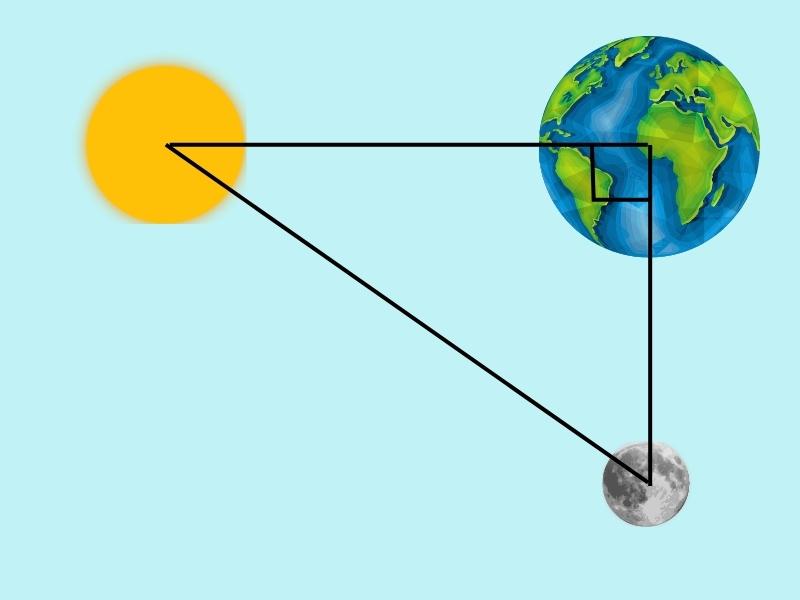
Yes, they use trigonometry to calculate how far a planet or a star is from Earth. For example, to calculate the distance between the Earth and the moon, the circumference of the moon and one of the diameters are used to calculate the arc-length formula. Putting the values, the exact distance in miles comes out. Neil Armstrong and Edwin Aldrin successfully etched their name in history by landing on the moon only because trigonometry helped in all the calculations.
3. In measuring heights
Everyone knows that Everest has a height of 8848 meters. Indeed, nobody actually climbed Everest with a measuring tape and recorded its height. It is only a trick of trigonometry where a point of observation is located first.
Next, you measure the object’s distance from the observation point and the angle between an imaginary line from the top of the object and the observation point. Calculating them with the tan function will give you the height.
4. Developing sound effects

Imagine you are watching a horror movie. When a spirit suddenly appears on the screen, you jump because of the scene and the eerie sound. Also, when you scroll through YouTube, you will find posts like “music for deep concentration, the study” or something like that.
How do you think sound engineers develop these sound effects with the perfect pitch, volume, and other things? Yes, you got it right. They study the sound waves created by sine and cosine curves, analyze and comprehend the music, and make necessary changes.
5. Building a house? Trigonometry is there to save you!

The construction industry uses trigonometry widely. From measuring how much the roof will be inclined to planning and constructing parallel/perpendicular walls, architects or designers need to calculate everything in trigonometry. They use the tan function to decide how long a wall should be. The Sine function helps them measure how far up a wall is. With the exact intersection angles available, architects plan accordingly to ensure the safety of the building.
6. Flying somewhere? Don’t forget trigonometry!

Once an airplane is up in the sky, it is not the engine or the pilot’s skill that keeps it floating. The direction and pressure of wind are also integral to ensuring the safety of the bird. If we take a right-angled triangle and consider the two perpendicular sides, we can get the direction the wind is blowing in.
Air Traffic Control uses the speed and angle of flying of the airplane and the speed of the wind. On paper, these data will produce a triangle and calculate the third side using trigonometric ratios. This way, the control tower guides the pilots on which way to use so that the wind direction can facilitate the plane’s journey.
7. Do you hope to be an archaeologist someday? You will need trigonometry!

When you see an excavation site, you will see that the area is not dug up randomly. The archaeologists divide the area into equal parts. Where to dig and how deep to dig- these are calculated by trigonometry only.
Archaeologists label and mark rock layers into numbered plots to identify which artifact was in which province, calculate the underground position of an artifact from above the ground using their position as the observation point and the angle between the artifact and the observation point surface, etc. So, to excavate successfully and add to the natural history of humankind, you will find the use of trigonometry.
8. Use trigonometry in navigation

Roughly, navigation is studying any moving object. This can be in four forms: maritime, aviation, terrestrial, and space. We already told you about aviation and space. Sailors at sea use sextant tools and compasses to measure the angle of the sun with the horizon at a particular time. The third angle can be easily calculated considering the vessel as another side of a triangle.
GPS, or Global Positioning System, uses triangular trigonometric techniques while orbiting over specific locations on Earth. Three positions of the satellites with the Earth’s location form a triangle. You can determine where exactly a moving vehicle is using the formula and ratio of trigonometry.
9. Want to explore life underwater? Use trigonometry
Marine biology, or the study of plants and animals inhabiting the ocean, also uses trigonometry. A marine biologist calculates the depression or elevation angle using the water level to understand how far a particular plant or animal is.
Also, you find out that there are different types of phytoplankton or algae at different depths of the ocean. So, the sunlight reaches these algae at different angles too. The length and depth of the sunlight might impact their photosynthesis effectiveness or speed. You can find the answer by connecting the algae’s position, depth of the algae from the sea surface, and angle of sunlight.
10. Manufacturing a car or a shirt- trigonometry finds its use.

Engineers in the automobile industry manufacture vehicles with utmost perfection by accurately calculating trigonometric formulas to estimate the size of the items. These, in turn, ensure that when the car is ready to run on the road, its parts work in absolute coordination.
When you go to the tailor and give your measurements for a dress, they tell you to extend your arm. So, your arm and your body create a right angle.
Measuring the arm’s length and the length of your torso, they get two sides of a triangle. With the value of the right angle known, they can easily decide the height of the dress. So, whatever there is to manufacture from scratch, trigonometry has extended helping hands.
11. Can you find a Smooth Criminal? Trigonometry will help you!

Forensic specialists or crime investigators study how the blood has spattered; if there is a gunshot hole, they analyze it to understand the angle of impact, etc. Together with this, they use navigation technology. For example, suppose there is a blood droplet a few feet away from the blood splatter. They measure the distance first. Now, they determine the angle of blood impact.
The analyst uses these two measurements to form a triangular structure and, using trigonometric formulas and the tan function, determine the height at which the blood originated. Finally, the criminal’s position and type of weapon are deduced.
12. Trigonometry is your companion in designing a marine ramp
When a marine vessel is floating toward its destination, it needs a proper marine ramp.
Using trigonometry, you connect the lower and the higher level areas by forming a sloping surface. This is necessary for building a marine vessel or navigating it.
13. Use in medical service

Many people across the globe continue their everyday life with prosthetic body parts after an accident.
Trigonometry helps medical professionals design those based on specific proportions. They measure the angle at which the prosthetic limb should be set to provide stability.
Next, they measure the prosthetic limb’s angles while swinging in the air and touching the ground. With these three angles known, they calculate the length and other data of the limb and prepare it accordingly so that it fits perfectly. The suspension system they use for controlled coordination of the amputee’s limbs measures the body as one side of the triangle forming a right angle with the system.
14. Other uses of trigonometry in real life
- Calculating projectile motion, vector components, field strengths, etc. in Physics
- Creating maps or cartography
- Calculating heights of ocean tides in oceanography
- In-depth analysis of sound and light waves through sine and cosine functions
- Satellite design and launch
How can budding learners learn trigonometry?
A few exciting and fun ways to learn trigonometry can be:
- Play a game of building an imaginary tree house. Now try to calculate how tall the tree trunk is.
- Use rhymes with a mathematical twist. For example, use “the mouse ran up the clock” to plot a height graph about how high the mouse will climb every time the clock strikes.
- Use a paper cylinder with an ink blot point. Roll it on a sheet of paper. Now use it as an example of a unit circle.
💡 Classroom Angle Sourcing Checklist
Before prompting 10th-grade students to frame ratio equations or solve distance problems, utilize these three classroom parameters:
- Build a DIY clinometer anchor: Have students tape a standard drinking straw and a weighted string onto a protractor to physically track angles of elevation on real school structures.
- Isolate the right angle baseline first: Prevent tracking mistakes by making sure students actively identify the 90-degree square corner before deciding which wall is the hypotenuse pathway.
- Utilize step-by-step scaling routines: Encourage learners to tackle basic tangent shadows first before advancing to complex multi-step sine and cosine wave sequences.
🧠 Minimizing Angle Fatigue via Real-World Scenarios
Struggling to memorize abstract trigonometric identities or tracking complex wave lines on a flat, non-interactive blackboard can induce rapid working memory exhaustion and math avoidance in students. Transitioning the concept from pure algebraic equations into concrete real-world story scenarios—like plotting flight paths or measuring mountain slopes—completely removes this cognitive barrier. Real physical anchors ground the data, reducing spatial confusion and giving students the baseline structural confidence they need to compute advanced math properties easily.
Takeaway
Wrapping things up, trigonometry clearly has a lot to do with real life apart from only calculating structural heights in a math book. Deeply understanding how right triangles work simply means knowing how to solve many practical, everyday problems without breaking a sweat.
Once you know the primary formulas and functions by heart, it is honestly nothing to be afraid of. As you can see from our list, tracking angles can be of massive help across a huge variety of distinct professions.
So whatever you aspire to be in the future, whether it is a high-level mathematician, a video game programmer, or a professional seamstress, trigonometry will always accompany you in your career. Connecting these textbook principles to the real physical world completely changes the game, stripping away classroom anxiety and turning dry formulas into a highly practical life skill.

An engineer, Maths expert, Online Tutor and animal rights activist. In more than 5+ years of my online teaching experience, I closely worked with many students struggling with dyscalculia and dyslexia. With the years passing, I learned that not much effort being put into the awareness of this learning disorder. Students with dyscalculia often misunderstood for having just a simple math fear. This is still an underresearched and understudied subject. I am also the founder of Smartynote -‘The notepad app for dyslexia’,