7 Fun Online Games For Learning About Figurative Language

figurative games

Figurative language adds depth and nuance to our communication, allowing us to convey complex ideas and emotions with just a few words. Metaphors, similes, personification, and other figures of speech enrich our language and bring it to life.  But learning about figurative language can be a challenge, especially for students who may find it dry … Read more
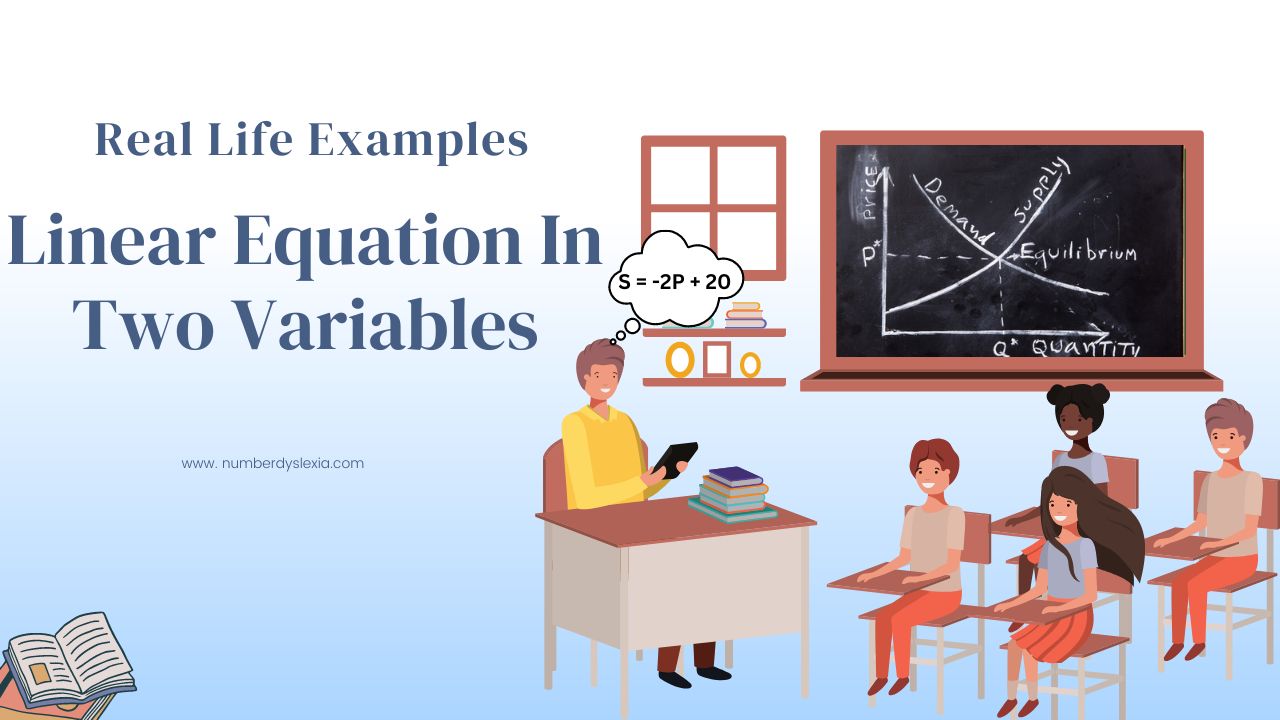
10 Real-Life Examples of Linear Equations in Two Variables

LINEAR EQUATION

Trying to find clear linear equations in two variables real-life examples for a math project, or just looking for practical real-world examples of linear equations to survive algebra class? Spotting examples of linear equations in your everyday routine is actually much simpler than staring at a dry textbook page full of confusing coordinates. The concept … Read more

10 Examples Of How Continuous Probability Distribution Is Used In Real Life

continuous probability distribution real life examples

How do we know an event is going to take place? While some use their intuition, however, mathematicians developed a relatively scientific approach towards prediction – probability distribution. While a lot of time probability is confused with statistics, however, a probability distribution identifies the likelihood of different outcomes in an event.  Continuous probability distribution is … Read more

8 Classroom Games & Activities For Learning Line, Line Segment, And Rays

line, line segment and rays

The world of geometry takes shape by the arrangement of lines, line segments, and rays. One cannot even imagine knowing geometry if one isn’t clear about the actual building blocks of the subject. It is interesting to see how the world around us uses this theoretical 2D knowledge to construct and build actual 3D objects.  … Read more

10 Cool Online Games To Learn Shapes

games to learn shapes

Learning shapes is crucial for little learners. It helps them understand things they see around them and derive meaning from their observations. Most parents introduce different shapes to their kids when they are around 2 – 2.5 years old. By the time they are three years old, most kids can identify simple basic shapes. Toys, … Read more

10 Fun Triangle Congruent Games and Activities For Classroom

triangle congruent

Hey, look at this symbol – ≅ If your students or kids look at this symbol and think someone put some toothpaste on an equality sign, they are not alone. Using statements and some simple set of rules to find whether two triangles will completely coincide when put above each other or not is definitely … Read more

8 Common Inductive And Deductive Reasoning Examples In Everyday Life

inductive and deductive

Logical reasoning is one of the most talked about concepts in today’s time, and there are a lot of examples too, that indicate how we use logical thinking in everyday life. Pedagogical experts are concerned with strengthening this branch of the intellect so much that each type of reasoning or activity that can stimulate this … Read more

10 Cool Chemistry Games To Play Online

online chemistry games

Do you remember how the equation represents the reaction that forms hydrochloric acid? If your answer wasn’t an immediate “Cl2 + H2 = 2HCl”, you are not alone. Chemistry is not an easy subject to master, especially with its interdisciplinary nature where it also requires a working knowledge of math and physics among other subjects. … Read more

10 Everyday Spherical Objects: Real-Life Examples of Sphere-Shaped Things

Sphere examples in real life

Trying to find some common spherical objects around the house or looking for simple sphere-shaped objects to show your kids? Tracking down real-world sphere examples is one of the easiest ways to help young learners see how 3D geometry actually works outside of a boring textbook. From sports equipment to things sitting right in your … Read more

9 Primary School Games and Activities Promoting Computational Thinking Skills

computational thinking

Computational thinking is comparable to a task being completed in a series of steps. For instance, a child learning to walk might have to focus on balance, speed, and posture. Similarly, computational thinking fundamentally involves breaking down a problem into manageable steps. While some argue that computational thinking might be trickier for primary school children … Read more